How Long Should Beginners Run? Start Smart and Build Endurance Safely

Most new runners want to know one thing: how long should I be running?
It’s easy to assume more is better — 30 minutes, a few miles, maybe try to match what you see other runners doing. But pushing too far too fast is one of the fastest ways to burn out or get hurt.
I’ve seen it countless times in the clinic. A beginner starts strong, logs a few ambitious runs, then shows up with sore knees, tight calves, or frustration because the habit isn’t sticking.
The truth? Running less (at first) can help you go farther in the long run. This post will show you how long beginners should run when starting, how to build safely, and how to avoid the common traps that derail progress.
✅ Key Takeaways: How Long Should Beginners Run?
- Start with short runs — even 10–20 minutes is enough for new runners
- A slow jog is more effective than chasing distance early on
- Run-walk intervals reduce injury risk and support habit building
- Gradually increase your run time week by week — aim for a few minutes, not miles
- Ignore what other runners are doing — your running journey is your own
- If you feel sore or fatigued, don’t hesitate to take a rest day or do a brisk walk instead
- Cross training as strength work or cycling, supports recovery and endurance
- Don’t worry about stride length or pace yet — focus on good running form
- A few tough runs are okay, but if every session feels hard, back off
- Many beginners try too much too soon and end up frustrated. Consistency always wins
- Progress happens in a few weeks, not overnight. Stick with it, and results will come.
How Long Should Beginners Run at First?
When you’re just starting, less really is more. Most beginner runners do best with runs that last between 10 to 20 minutes, or about 1 to 2 miles at a slow, conversational pace. You don’t need to hit a magic number — the key is to finish your run feeling like you could have gone longer.
Here’s what matters most:
- Focus on time over distance — it’s easier to pace
- Aim for a slow jog, not a hard run
- Stop or slow down if your form starts to fall apart
- Build the habit before chasing performance
Think of your early runs as laying a foundation. You’re teaching your muscles, joints, and cardiovascular system to handle new demands. Run too long, too soon, and you’re more likely to deal with soreness or nagging injuries that sideline your progress.
If you’re not sure how fast or smooth your stride should feel, this guide on running cadence for beginners can help you get started with better rhythm and fewer injuries.
Should You Do Run-Walk Intervals?

Walk/run intervals are one of the smartest ways to build endurance without overdoing it. If you’re just starting out, alternating short runs with walking helps you stay consistent while avoiding injury and burnout.
Try this structure to begin:
- Run for 1 minute, then walk for 2 minutes
- Repeat this for 4–6 rounds
- As your fitness improves, slowly increase the run time and reduce the walk
And here’s the best part: even experienced runners use the walk/run method — especially when returning from injury, coming back after a long break, or during long-distance races to conserve energy.
Walking isn’t a step back — it’s a strategy. You’re still training your lungs, heart, and muscles to handle the demands of running without overwhelming your body.
Want help getting started? This Run-Walk Method for Beginners includes a full guide to walk/run ratios, pacing, and common mistakes to avoid.
How to Gradually Increase Running Time

It’s tempting to jump from a short jog to a long-distance run overnight — especially when you see other runners cruising past like it’s easy. But pushing too fast too soon often leads to injury or burnout.
Instead, gradually increase your run time in a way your body can handle:
- Add just 1–2 minutes per run each week
Small, steady increases build endurance without overwhelming your joints or lungs. - Stick with the same run time until it feels comfortable
If a 20-minute run still leaves you winded, repeat it for another week before adding more. - Follow the 10% rule
Don’t increase your total weekly mileage by more than 10% at a time. It’s a proven method to reduce overuse injuries. - Pay attention to your body
Soreness means you’re adapting. Sharp pain or fatigue that lingers? That’s your cue to pull back.
💡 Many new runners get discouraged when they compare their progress to other runners. Don’t. Run at your pace, for your goals, not theirs.
👉 Learn how to extend your runs without overdoing it: How to Run Longer
Signs You’re Running Too Long
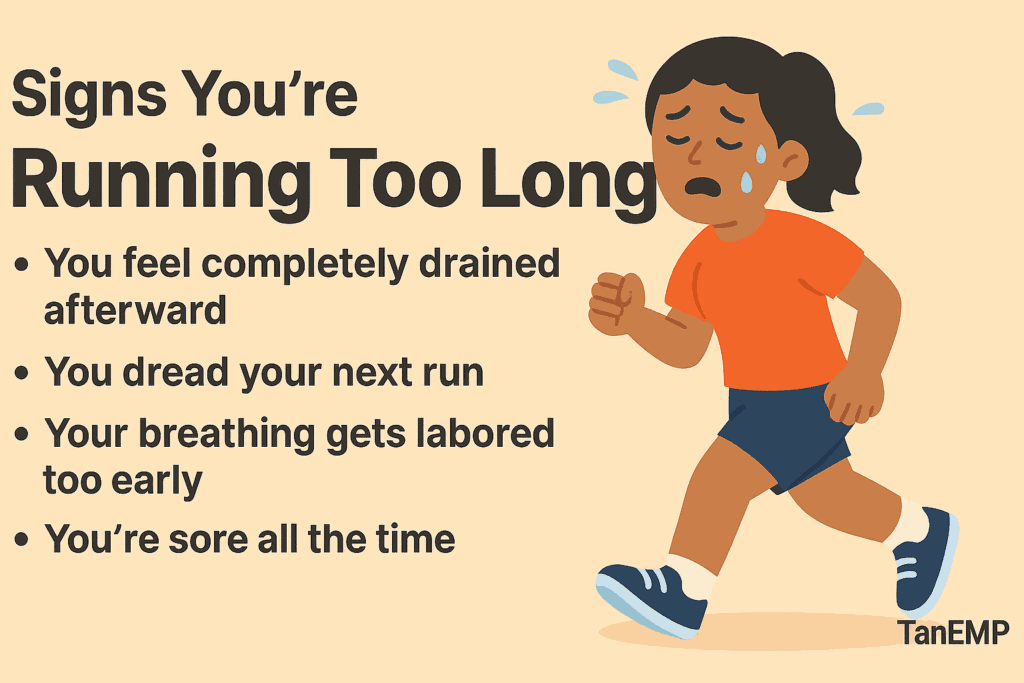
Many runners tend to go all in without holding back, myself included when I first started.
It felt amazing to push for “just five more minutes”… until the next morning when I could barely move. I should’ve known better — chiropractor or not, that was a classic beginner mistake.
Here’s how to tell if you’re running too long for your current fitness level:
- You feel completely drained afterward
A run should leave you feeling accomplished, not like you need crutches and a nap. - You dread your next run
If the thought of lacing up feels like a chore, it’s your body’s way of saying, “ease up.” - Your breathing gets labored too early
Huffing and puffing just minutes in? That’s your signal to shorten the session. - Your form falls apart
Slouched shoulders, heavy foot strikes, or dragging your feet usually mean fatigue has taken over, and form is the first thing to go. - You’re sore all the time
Some soreness is fine, but if it’s constant or interfering with your daily routine, you’re doing too much too soon.
💡 Keep your form smooth and protect your joints. Learn how in this guide:
👉 Proper Running Form for Beginners
Sample Beginner Progression Plan (Table)
Starting slow isn’t a sign of weakness — it’s a smart strategy. Many beginners try to go all-in, but steady progression gives your muscles, joints, and lungs time to adapt.
👉 If you’re not sure how often to run each week, check out this beginner guide on weekly running frequency to help balance your plan.
Use this simple 4-week structure to guide your running time:
Week | Run Time | Notes |
|---|---|---|
Week 1 | 10–15 mins | Use walk/run intervals — focus on form |
Week 2 | 15–20 mins | Add ~2–5 minutes to total run time |
Week 3 | 20–25 mins | Reduce walk breaks as you feel ready |
Week 4 | 25–30 mins | Try a steady jog if recovery feels good |
Tips:
- Don’t increase every run — one longer run per week is plenty.
- If a run feels like a “tough run,” hold steady the next week before progressing.
- A good run should leave you energized, not wiped out.
Cross-Training Still Counts
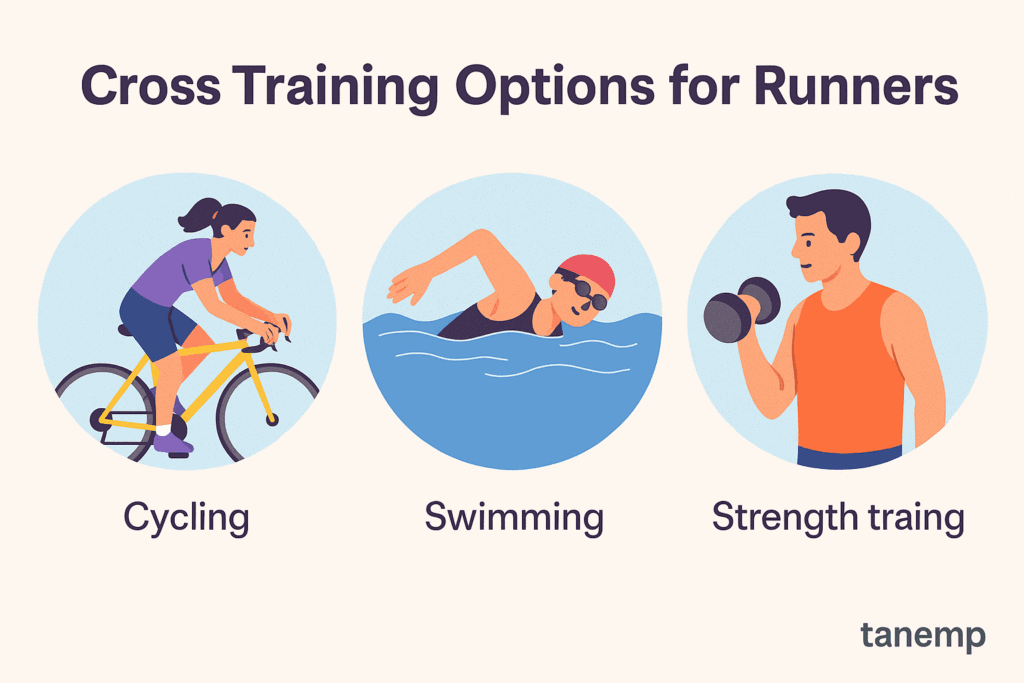
Running isn’t the only way to get better at running.
In fact, cross-training is one of the smartest tools beginner runners can use, especially on “off” days. It lets your body recover from the impact of running while keeping your fitness moving forward.
Try activities like:
- Walking: low-impact but still keeps your muscles engaged
- Cycling: builds leg strength without the pounding
- Swimming or aqua jogging: excellent for joint-friendly cardio
- Yoga or mobility work: improves flexibility and recovery
- Strength training builds muscles that support your stride
These activities can fill in your rest days or replace a run if you’re feeling extra sore.
🔗 Bonus: Here’s a helpful breakdown from Cleveland Clinic on how cross-training improves endurance and prevents injury.
🏁 Wrap-Up
You don’t need to run far or fast to become a runner.
Many beginners overthink how long they “should” run. But the truth? Just starting — even for 10 minutes — is more than enough to build a lasting habit.
- Keep your runs short at first.
- Listen to your body, not other runners.
- Focus on consistency over speed or distance.
As a chiropractor and beginner runner, I’ve seen how going too hard too soon leads to injury, burnout, and discouragement. A smart training plan builds gradually and leaves room for recovery, cross-training, and life.
✅ Want to keep building endurance? Learn how to run faster and longer without wrecking your body or motivation.
Disclaimer: This article is based on my experience as a licensed chiropractor and recreational runner. The information provided is for educational and informational purposes only and is not intended to replace medical advice, diagnosis, or treatment. Always consult with your healthcare provider before beginning a new exercise program, especially if you have pain, injuries, or medical concerns.
❓ FAQ: Beginner Run Duration Questions
Q1: Is 10 minutes of running enough for beginners?
Yes — even 10 minutes can improve heart health and build a habit. You can build from there. Short runs still count, especially when you’re consistent.
Q2: Can I run every day if it’s only short runs?
It’s better to start with rest days between runs. Running daily — even short sessions — can increase the risk of injury if your body isn’t adapted yet.
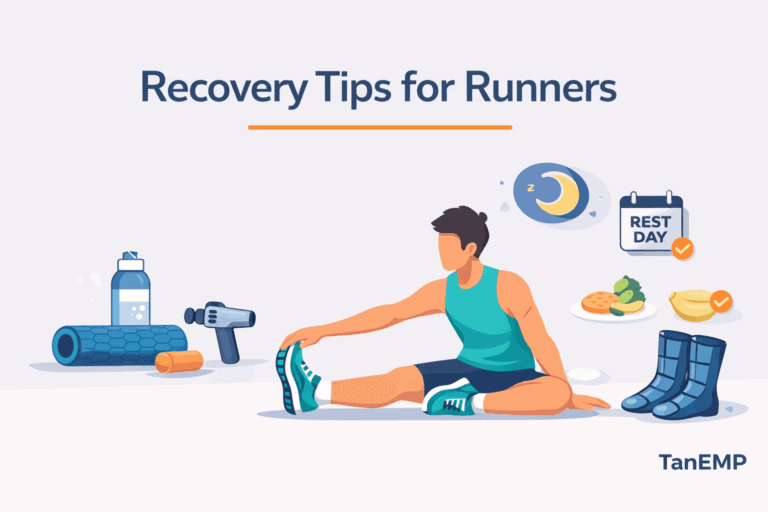
👉 Post-run recovery tips
Q3: How do I know when to run longer?
If your current runs feel manageable and you recover quickly, it may be time to slowly increase duration. Think in terms of weeks or a few months, not days.
Q4: Should I worry about pace or distance?
Focus on time and form first. Distance and pace come later. The goal is building endurance safely, not running as fast or far as possible.
Q5: What’s more important — consistency or length?
Consistency. Running 15 minutes three times a week is more effective than one long run that wipes you out. Your body adapts to what you repeat, not what you occasionally push.
👉 How to build a sustainable running routine