Best Time to Run: Morning vs Evening Runs Explained for Beginners

Trying to figure out the best time to run? Some runners swear by early morning runs for burning fat, while others claim evening runs improve performance.
The truth is — there’s no one-size-fits-all answer.
In this guide, we’ll break down the science, benefits, and trade-offs of morning vs evening runs so you can choose what fits your lifestyle, energy levels, and goals.
Whether you’re aiming to boost mental clarity, build a routine, or enjoy cooler temperatures, finding your personal sweet spot matters more than following the crowd.
👉 Related reads to help you decide:
Let’s dive in.
✅ Key Takeaways: Best Time to Run
- The best time to run is when you’re most likely to stay consistent.
- Morning runs may help you burn fat, boost your mood, and start the day strong.
- Evening runs offer better performance due to higher core body temperature.
- Mix up morning and evening runs to find your best rhythm.
- Trying to lose weight? Timing helps, but consistency and diet matter more.
- Whether you’re an early bird or prefer late afternoon, the key is showing up.
- Grab your running shoes, warm up, and run at a time that fits your life.
🌅 Morning Runs: Benefits and Drawbacks
For early risers, a morning run can be a powerful way to kickstart the day. Whether it’s before the world wakes up or during your quiet moment before work, running early has some unique perks.
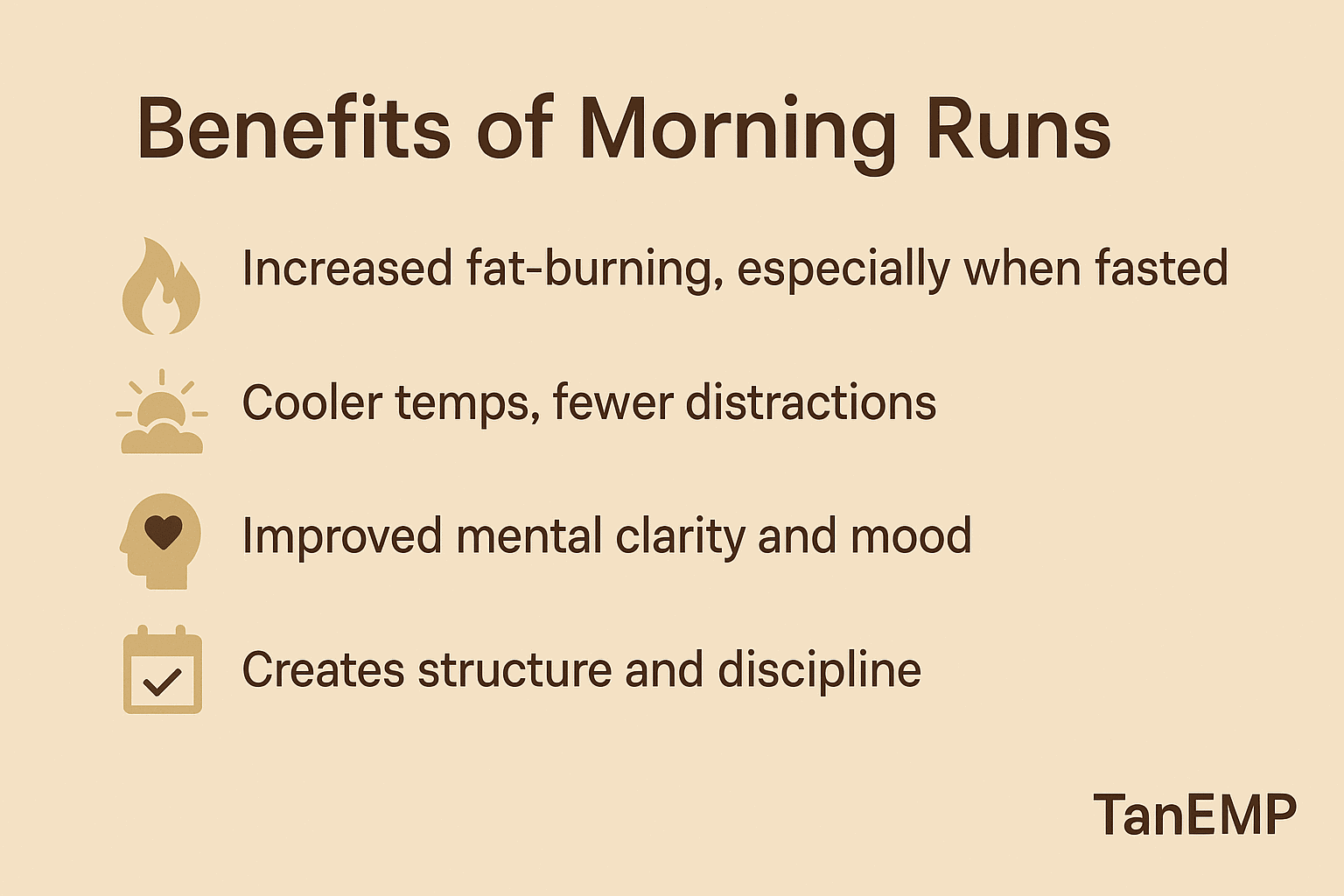
✅ Benefits of Morning Runs:
- Increased fat oxidation — especially when running before breakfast — may support weight loss.
- Cooler temperatures and fewer distractions make it easier to stay focused and consistent.
- Many runners experience improved mental clarity and mood after a morning workout, helping them feel more productive and positive.
- Creates structure and discipline, especially if you follow a routine like a 5-minute warm-up to ease into your pace.

⚠️ Potential Drawbacks:
- Your body may feel stiff or sluggish, especially without a proper pre-run routine.
- Running in the dark can pose safety concerns — always wear reflective gear and choose well-lit paths.
- Poor sleep or a hectic morning schedule can make early runs feel more like a chore than a joy.
If you’re someone who feels best after getting movement in “first thing,” early morning runs might be your anchor. But if mornings leave you dragging, don’t force it — we’ll compare evening options next.
🌆 Evening Runs: Pros and Cons
If mornings aren’t your thing, an evening run might feel like the perfect way to unwind — and for many runners, it’s when the body is naturally primed for better performance.
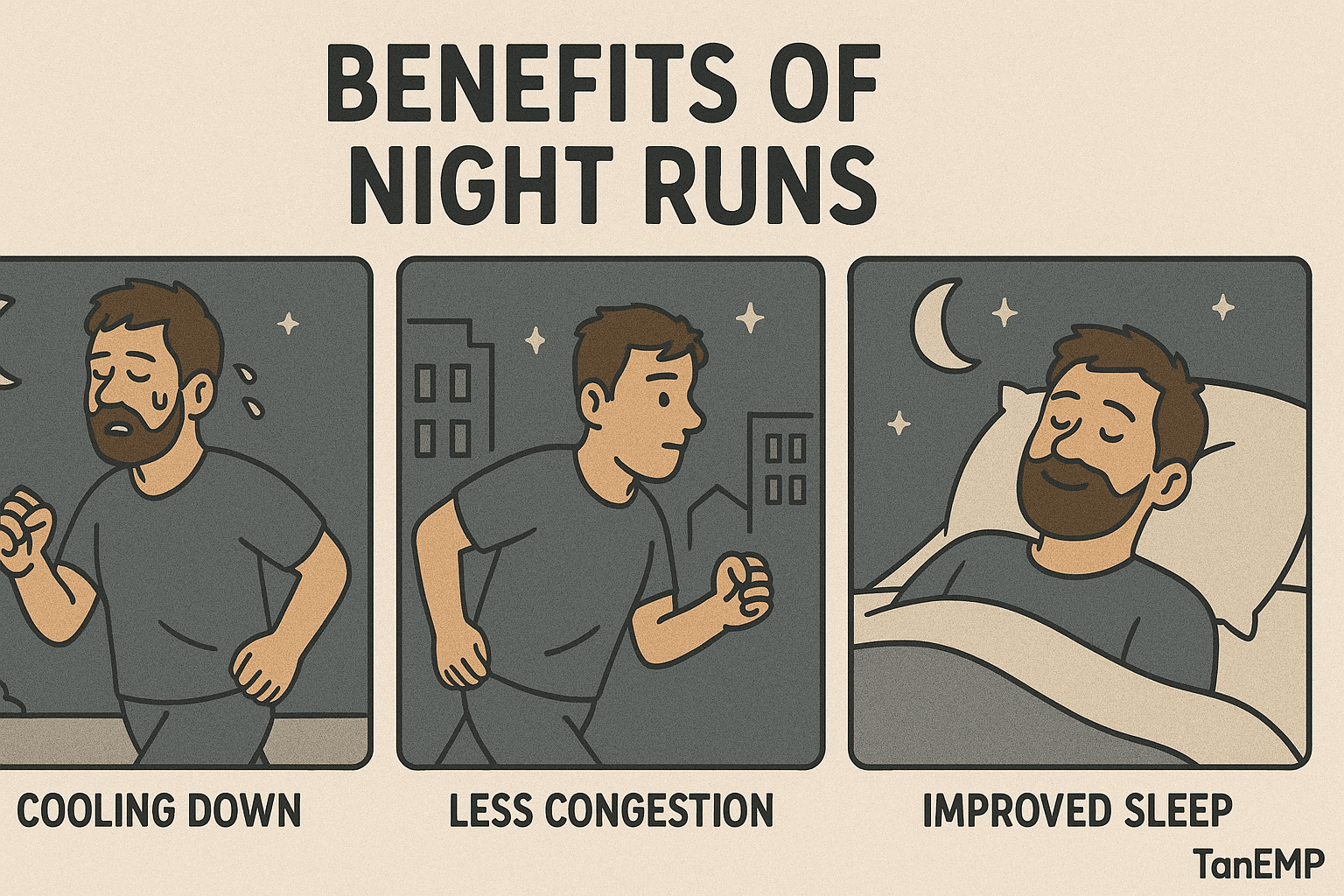
✅ Benefits of Evening Runs:
- Higher body temperature in the afternoon = better muscle flexibility, oxygen delivery, and overall running performance.
- Great for stress relief after a long day, especially if you’re stuck at a desk or juggling kids.
- Easier to fuel properly — no need to worry about running on an empty stomach.
- It may help de-stress and clear your head before bed.
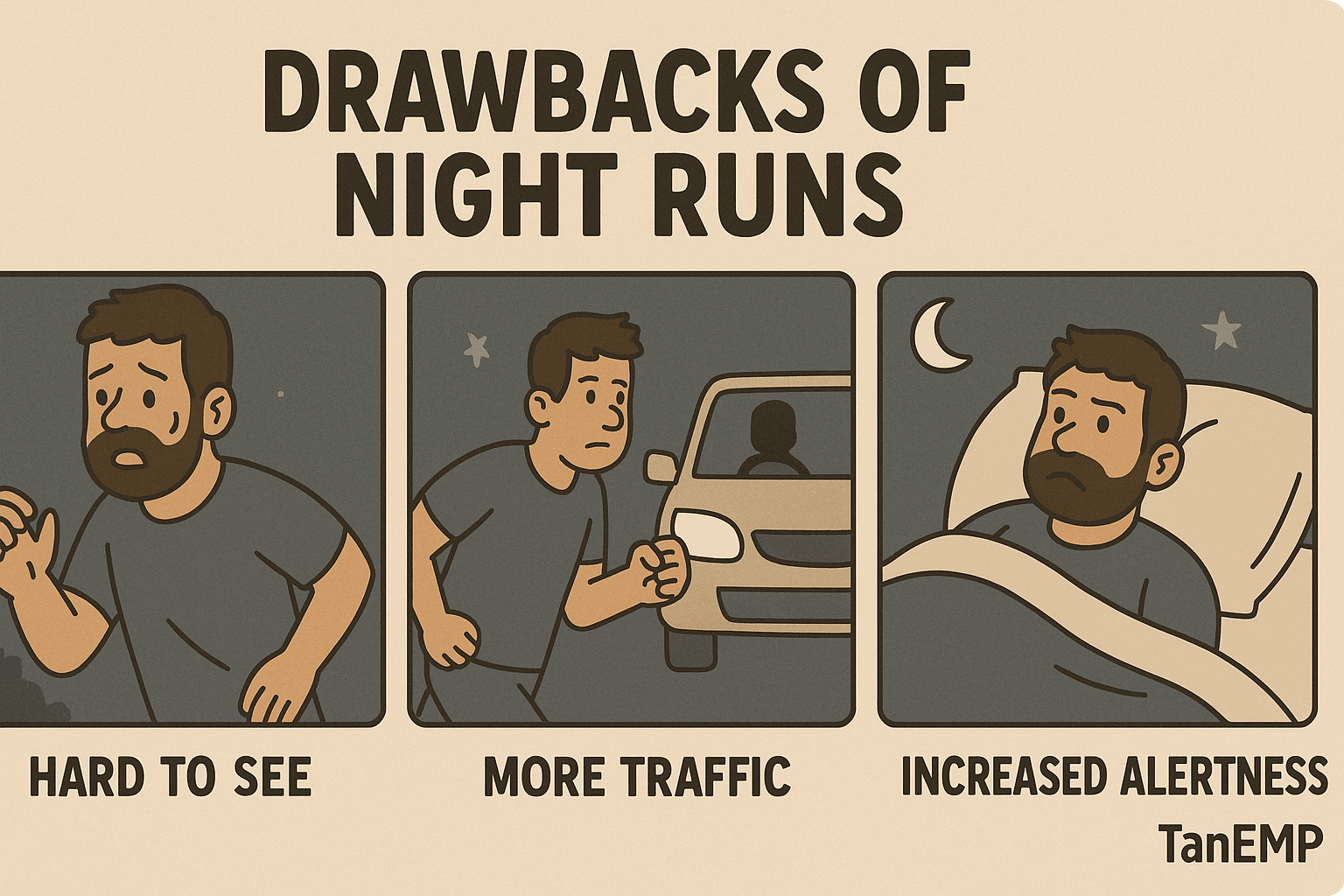
⚠️ Evening Run Challenges:
- Harder to stay motivated after work — that couch and Netflix call loudly.
- It can interfere with good sleep if you run too close to bedtime (aim to finish 1–2 hours before).
- Safety can be a concern in low light — wear reflective gear and stick to well-lit, regular routes.
Evening runs can be perfect for those who feel stronger later in the day, or just have packed mornings. If that’s you, don’t fight it. Go with what works.
If you struggle with motivation at night, this guide on Running Motivation for Beginners can help you stick with it — even on the tough days when happy hour is calling.
🧠 What the Science Says
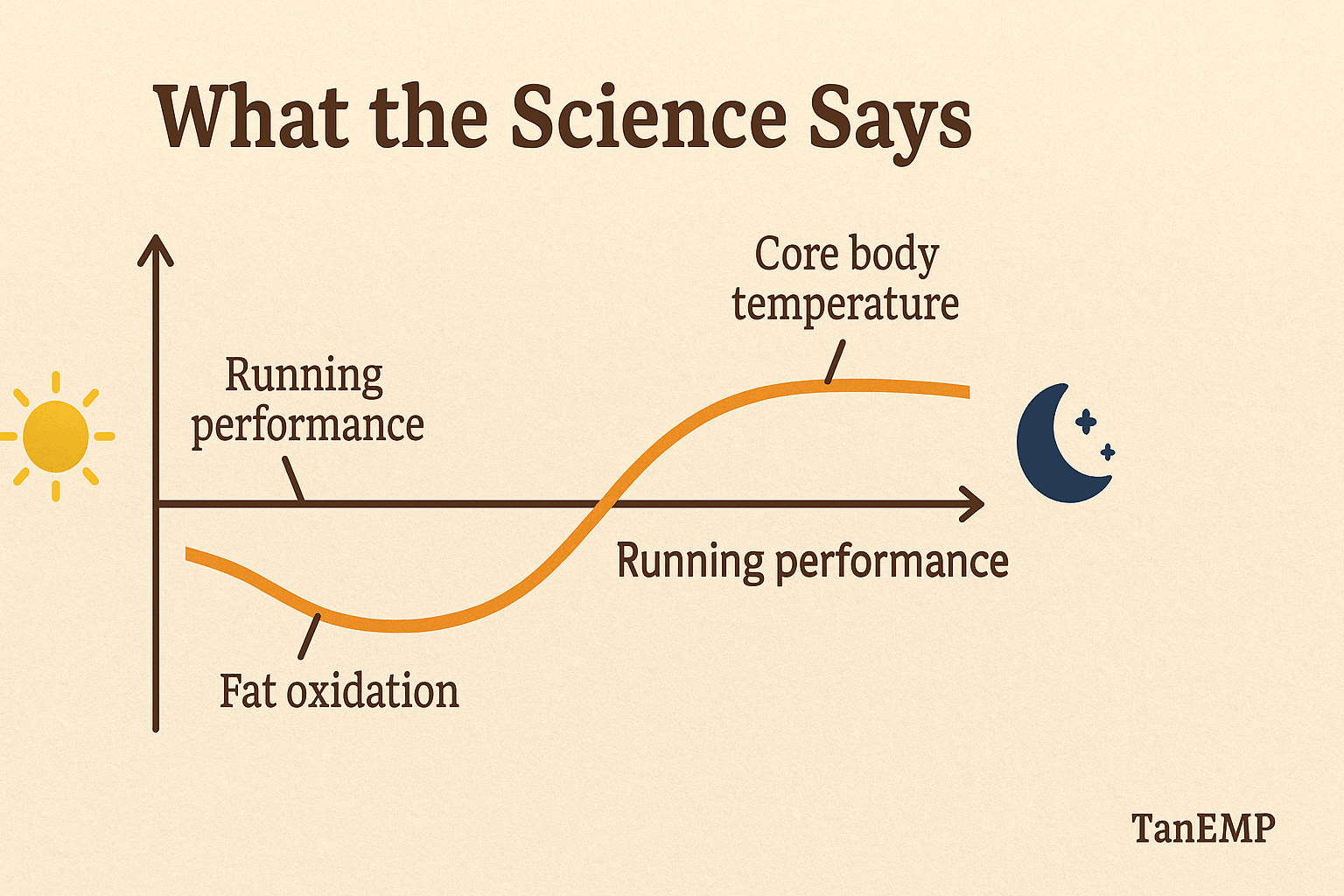
Let’s settle it: Is there a scientific best time to run?
Turns out, the answer is… it depends.
Studies show your circadian rhythm — the internal clock that regulates body temperature, energy, and hormones — plays a big role in running performance. In the morning, fat-burning (aka fat oxidation) might be slightly higher, especially during fasted runs. In the evening, your body is warmer, oxygen delivery improves, and muscles may perform better for harder efforts like interval runs.
➡️ This NIH article breaks down how aerobic exercise interacts with your biological clock.
But here’s the real takeaway:
Consistency matters more than timing.
Running at the same time each day — whenever that fits your life — helps your body adapt better.
👉 Learn more: Best Time to Run: Morning vs Evening Runs Explained.”
For example, even though I know the benefits of early morning runs, I’ve accepted that I’m not a morning person. Evening runs help me de-stress after long days treating patients, and that’s what keeps me coming back.
One more thing: no matter when you run, your form matters. Check out these proper running form tips to avoid injury.
🕐 How to Choose the Best Time for You
Now that you’ve seen the pros and cons of each time slot — and why consistency matters more than timing — here’s how to figure out what fits you.
Ask yourself:
- Are you a morning person or a night owl?
- Do you have more energy before or after work?
- Are your goals focused on weight loss, better sleep, or mental clarity?
- When are you least likely to skip a workout?
- Do you have time for a proper warm-up and cool-down?
No one answer works for everyone. For example, many night owls find their core body temperature peaks later in the day, which boosts performance. Morning people often enjoy the quiet and mental boost of early movement.
The right time to run is the one you’ll stick with.
🧠 Personal note: I know the science behind early runs and fat burning, but truth is — I’m not a morning person. After long days adjusting patients, I’d rather run at night to shake off stress. It keeps me consistent — and that’s what matters most.
Sample Weekly Schedule (Mix AM & PM Runs)
Still not sure when to run? Here’s a beginner-friendly sample week that blends morning and evening runs, giving you space to try both while still allowing recovery time:
Day | Activity | Time |
|---|---|---|
Mon | Easy jog | Evening run |
Tue | Rest or walk | Morning |
Wed | Short easy run | Morning run |
Thu | Interval run | Evening run |
Fri | Rest or cross-train | Flexible |
Sat | Long run | Morning run |
Sun | Optional jog or rest | Evening run |
Why this works:
- Morning runs give you fresh energy and fewer distractions.
- Evening runs tap into higher body temp and loosened muscles.
- Rest days help prevent burnout — essential for new runners.
Wrap Up: So, When’s the Best Time to Run?
There’s no universal “best” time to run — just the time that fits your life, your energy, and your goals.
Whether you’re an early bird chasing the sunrise or someone who finds peace pounding pavement at dusk, the key is consistency. That’s what builds momentum — not the clock on your wrist.
Running in the morning might help with fat oxidation or mental clarity, while evening runs may boost performance or relieve stress. But neither matters if you’re skipping workouts or dreading each run.
One of my patients once joked that her biggest regret about becoming a morning runner was that now her body wakes her up at 5 a.m. on weekends — even when she wants to sleep in.
👉 Your action step: Try both. Track how you feel. Build a routine that works for you.
✅ Start with a simple plan like Couch to 5K — it works whether you run at 6 a.m. or 6 p.m.
❓ FAQ Section
Is it better to run in the morning or at night?
It depends on your schedule and goals. A morning run may support fat oxidation, mental clarity, and consistency. An evening run can often improve running performance, thanks to higher body temperature and increased energy levels. Choose the best time to run based on what helps you stick with it.
Will I burn more fat running in the morning?
Running in the early morning on an empty stomach might increase fat oxidation, but overall weight loss depends more on total calories burned and your diet. If your goal is to burn fat, focus on being consistent and building a long-term routine, not just the clock.
Does running in the evening affect sleep?
It can if done too close to bedtime. To improve sleep quality, finish your evening workout at least 1–2 hours before bed. Pay attention to your body energy and mental clarity — some runners feel relaxed post-run, while others get too energized.
What’s the safest time to run outside?
Both morning and evening runs can be safe with the right precautions. Use reflective gear, run in well-lit areas, and follow your usual safety concerns checklist. Don’t forget visibility drops fast during early morning or late afternoon runs, especially in winter.
I’m a beginner — should I follow a specific running schedule?
Yes. A consistent running schedule helps build endurance and avoid injury. Start with short runs, gradually increase time, and prioritize rest. Check out this guide on How Often Should Beginners Run to build a smart routine.