How to Run in the Rain: Stay Dry, Safe, and Build Mental Toughness

Debating whether you should run in the rain or wait until it stops? But what if it’s raining all week and your body’s itching for a run?
I remember running on a day that started as a light drizzle. I thought, “No problem, I’ve got my rain jacket.” But ten minutes in, I got a flash flood warning on my phone. At that point, it was too late – my clothes, socks, and shoes were completely soaked. Let’s just say that wasn’t my best run.
If you’re in a situation where the only option is to hit the road – whether you’re training for a race that can’t be done indoors or you simply enjoy running in the rain – keep reading. This post will give you practical tips to make your rainy runs safer and more comfortable.
Key Takeaway (TL;DR)
✔ How to run in the rain safely:
- Wear moisture-wicking layers with a water-resistant outer layer
- Choose running shoes with a good grip for wet surfaces
- Avoid cotton; wet clothes cling and cause chafing
- Shorten your stride for better balance on slippery roads
- Protect electronics with plastic or ziplock bags
- Check for threatening storm clouds before heading out
- Warm up properly to stay loose in cold, rainy weather
- Dry off and change immediately after your run
For extra motivation to keep training even on tough days, check out these running motivation tips for beginners.
Is Running in the Rain Safe?

Running in the rain is generally safe, but it comes with risks like slippery surfaces, reduced visibility, and dangerous conditions if lightning or strong winds are present.
If you hear thunder or spot lightning, skip your run or wait it out indoors. No workout is worth risking your life.
Remember, storm clouds can roll in fast, so always check your weather app before leaving.
Running in the rain does require mental toughness. Wet conditions can test your focus and patience, but with the right preparation, it becomes an empowering experience that improves your overall running confidence. If you’re working on pacing in different conditions, here’s a helpful guide on finding your running pace for beginners to adjust smartly in any weather.
Benefits of Running in the Rain
Running on rainy days isn’t just for hardcore athletes. Here’s why it’s worth it:
- Builds mental toughness by training your brain to push through discomfort
- Keeps your body temperature cooler, which can help you run longer or with less perceived effort
- Less crowded paths and streets – peaceful “me time” without dodging other runners
- Helps prepare you for race days when the weather turns unexpectedly rainy
- Makes you feel accomplished and resilient afterward, boosting motivation for your next runs
If you’re nervous about running in rainy weather, start with light drizzle days to build confidence before tackling heavier downpours. For more tips on how to run in the rain without feeling miserable, Runner’s World has a great guide here.
What to Wear for Running in the Rain

Your clothing makes or breaks a rainy run. Here’s what to choose:
✅ Moisture-wicking base layers to keep sweat and rain away from your skin
✅ A water-resistant or waterproof outer layer (jacket) to keep your core warm and dry
✅ Running tights or compression shorts to prevent inner thigh chafing
✅ Avoid cotton – it soaks up water, stays wet, and can make you feel cold fast
✅ Wear bright colors or reflective gear to stay visible in reduced visibility conditions
If it’s cold and rainy, wear multiple layers so you can adjust as needed. For light drizzles, a moisture-wicking shirt with a water-resistant vest may be enough. For heavy rain, a full waterproof shell is ideal.
Choosing the Right Running Shoes
Your running shoes play a big role in rainy weather safety:
✔ Pick shoes with a good grip to avoid slipping on wet surfaces or muddy trails
✔ Consider waterproof running shoes if you run in the rain often
✔ If you don’t have waterproof shoes, use an older pair you don’t mind getting soaked
✔ Avoid wearing your favorite shoes on heavy rain days to preserve them
✔ After your run, remove insoles and stuff shoes with paper towels or newspaper to absorb moisture and maintain shape
Running with wet shoes feels heavy and can cause blisters. Moisture-wicking socks can help keep your feet dry longer, reducing discomfort.
If you decide to move your run indoors on stormy days instead, here’s a guide to the best treadmill running shoes for comfortable indoor workouts.
Protecting Your Gear
Electronics and running gear need protection during rainy runs:
- Use a plastic bag or ziplock bag to keep your phone dry if it’s in a pocket
- Check your running watch’s specs for waterproof ratings before exposure
- Wear a running hat with a brim to keep rain out of your face and protect your eyes
- If you’re carrying nutrition gels or paper notes (like pace charts), keep them in a small ziplock bag too
- Bring dry clothes or a towel in your car for immediate post-run changes
Small details like keeping your phone protected can make a rainy run much smoother.
Preventing Chafing and Blisters
Wet clothes rubbing against your skin increase chafing, especially on inner thighs, underarms, and feet. Here’s how to prevent it:
- Apply anti-chafing balm generously before your run
- Wear moisture-wicking socks to keep feet dry longer
- Opt for running tights or compression shorts to reduce skin-on-skin friction
- Change out of wet clothes immediately after finishing
- Rinse off muddy legs to prevent irritation or clogged pores
If you’re prone to blisters on rainy runs, consider applying sports tape on hotspots or wearing double-layer socks for added protection.
Adjusting Your Running Technique
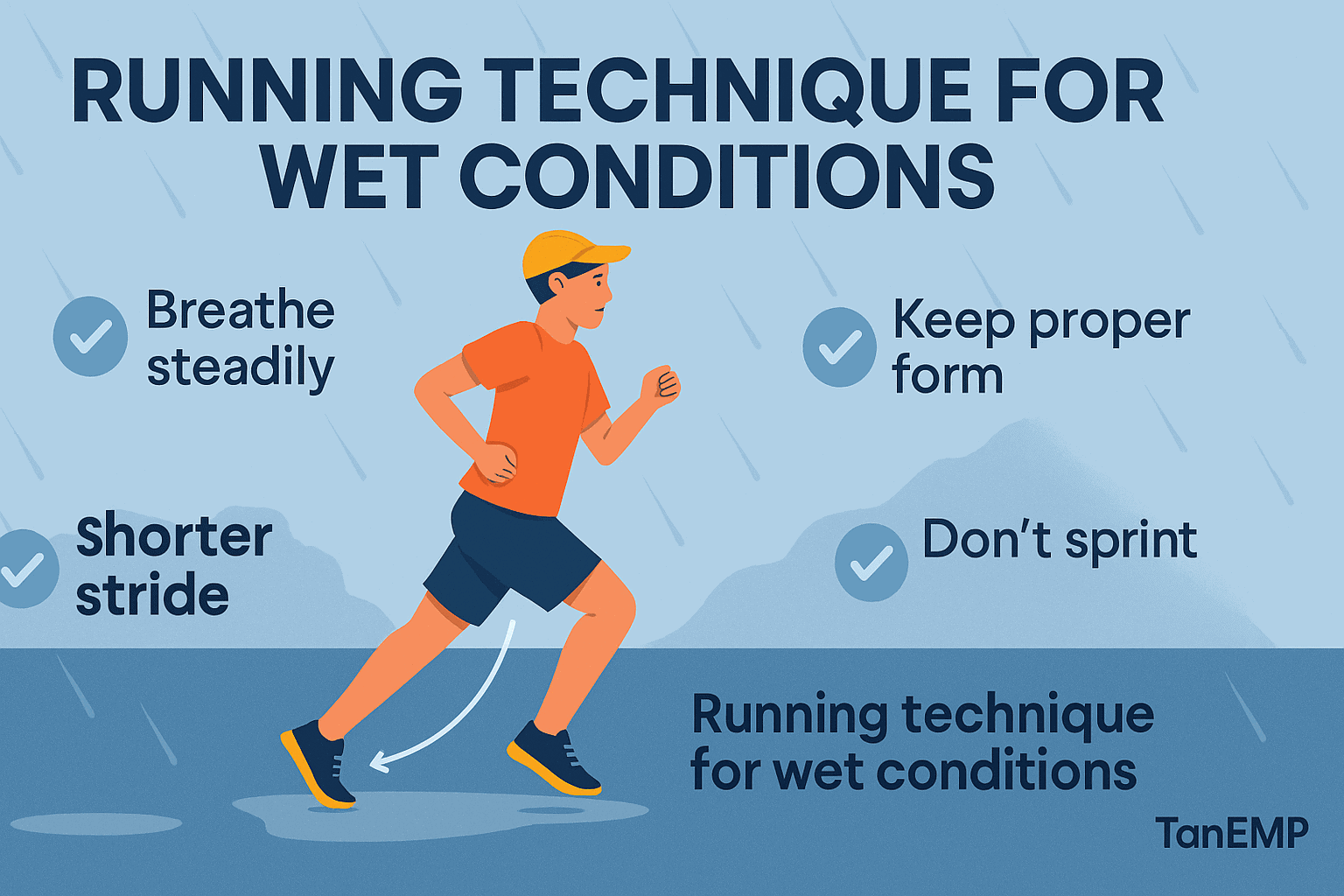
Running in wet conditions requires extra caution:
✔ Shorten your stride for better balance and stability
✔ Keep your feet landing under your center of mass to reduce slipping
✔ Avoid sudden turns or stops, especially on painted crosswalks or metal grates, which become slick
✔ Watch out for puddles – they not only soak your feet but can hide potholes or uneven surfaces
✔ Stay alert when crossing streets, as drivers may have reduced visibility in rainy weather
Focusing on form and safety over speed on rainy days helps build confidence without risking injury. To refine your overall technique, check out these guides on proper running form for beginners and how to breathe while running for smoother, more efficient runs in any weather.
Warm Up Properly Before Rain Runs
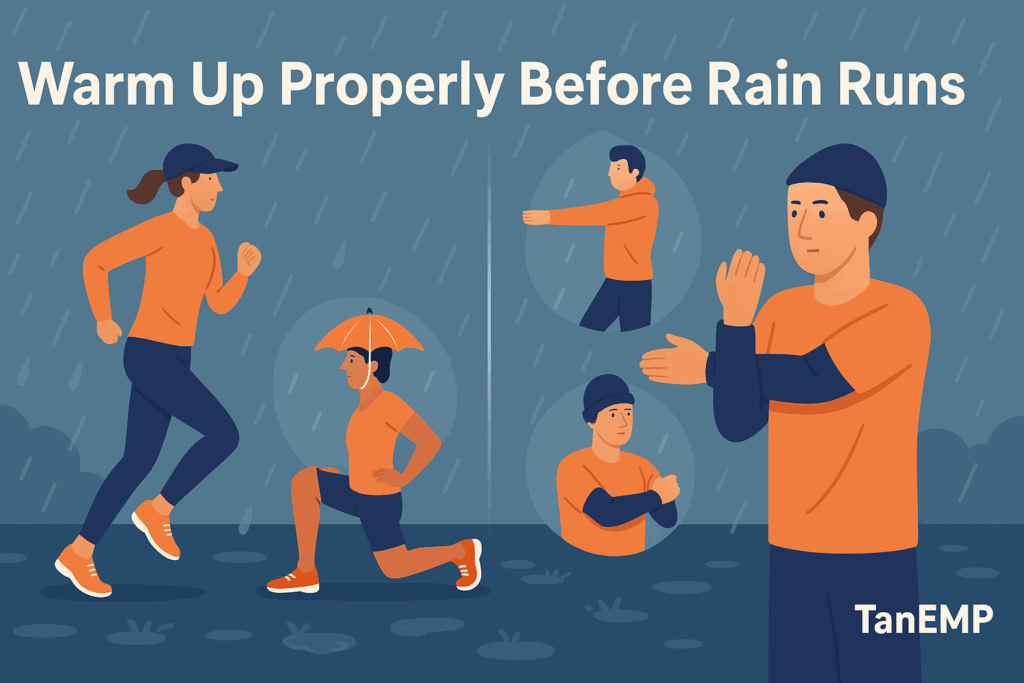
Don’t skip your warm-up, especially on cold, rainy days. Your muscles are less elastic when cold, increasing injury risk.
Try these quick warm-up drills indoors or under a covered area before heading out:
- Leg swings (front to back, side to side) to loosen hips and glutes
- Dynamic lunges or squats to activate the lower body muscles
- Arm circles and shoulder rolls to prep your upper body
- Light jogging in place for 2–3 minutes to raise core body temperature
A good warm-up not only preps your body but also gets you mentally ready to tackle your rainy run. For a full routine that’s quick and effective, check out this 5-minute running warm-up to add to your pre-run habits.
Here is your revised section with the internal link integrated smoothly and naturally, enhancing flow:
Post-Run Recovery After Rainy Runs
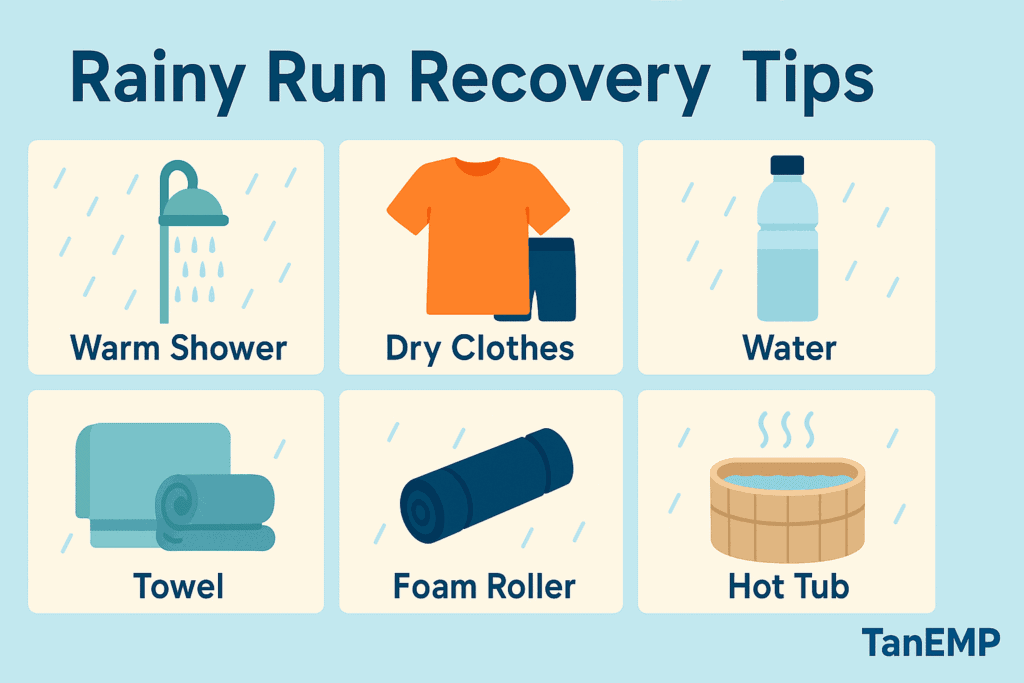
After a rainy run, proper recovery keeps you comfortable and healthy:
✅ Change into dry clothes and layers immediately to avoid feeling cold
✅ Take a warm shower to raise your body temperature if you’re chilled
✅ Clean your shoes, removing any mud or debris, and dry them thoroughly
✅ Stretch indoors to prevent stiffness
✅ Rehydrate with water or a sports drink, especially if your run was longer than 45 minutes
When stretching after your run, focus on static stretches to cool down effectively. If you’re unsure about the difference between static and dynamic stretching and when to use each, here’s a guide explaining static vs dynamic stretching for runners to maximize recovery and performance.
Taking care of yourself post-run ensures your next workouts stay productive without fatigue or lingering soreness.
When Not to Run in the Rain
Sometimes, it’s best to skip your rainy run for safety:
✔ Thunderstorms or lightning in the area – dangerous conditions require staying indoors
✔ High winds or severe weather alerts, as flying debris or falling branches can cause injury
✔ Pelting rain that stings your skin and makes running painful
✔ Flooded routes with fast-moving water – even shallow flooding can knock you off balance
On these days, it’s smarter to prioritize your safety. You can switch to a treadmill workout instead to keep your training on track. If you’re unsure about treadmill form, here’s a helpful guide on how to run properly on a treadmill for an effective indoor run.
Wrap Up
I hope by now you have a clear idea of what you’re getting yourself into if you decide to run in the rain. My final tip? Always check the weather before you head out.
Don’t be like me, getting caught in the middle of a flash flood. I saw the warning on my weather app but thought, “I’ll risk it.” Not a smart choice.
Yes, running through that downpour built some mental toughness, and it’s an experience I won’t forget. But honestly, I don’t recommend it. If there’s a storm or flash flood warning, it’s safer to run indoors or wait it out until the worst passes.
Running in the rain can build resilience and confidence – just choose wisely, stay safe, and train smart.
FAQ
What are the best running shoes for wet conditions?
For a rainy run, choose running shoes with good grip and water-resistant materials. Waterproof running shoes are great if you run in the rain often, but even regular shoes with solid tread can work. Avoid using your favorite shoes on heavy rain days to keep them in good condition, and always dry wet shoes thoroughly with paper towels after your run.
How do I stay warm on a rainy day run?
To stay warm during a rainy run, dress in moisture-wicking base layers with a water-resistant outer layer to keep heat in and rain out. Running tights help protect your inner thighs from chafing and cold. After your run, change into dry clothes and take a warm shower to bring your body temperature back up if you feel cold.
Is running in the rain good for mental toughness?
Absolutely. Running in the rain builds mental toughness because it teaches you to push through discomfort and bad weather. Over time, it makes you more confident on rainy days and other challenging conditions, so you won’t fear running in wet weather on future race days.
What safety tips should I follow for running in the rain?
When running in the rain, watch for slippery surfaces and puddles hiding potholes. Wear bright colors or reflective gear for reduced visibility conditions, and avoid crossing streets quickly if cars can’t see you clearly. If you hear thunder or spot lightning, seek shelter immediately, as these are dangerous conditions to run in.
Should I use a plastic bag or a ziplock bag for my phone on rainy runs?
Yes. Keeping your phone in a plastic bag or ziplock bag protects it from rain damage during your run. Even if your jacket is water-resistant, extra protection ensures your phone stays completely dry, especially in heavier rain.