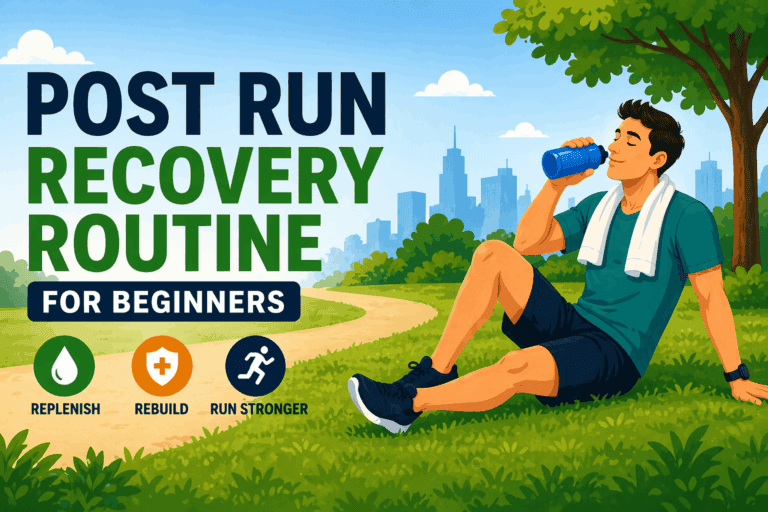
19 Recovery Tips for Runners: Recover Faster and Run Better

Always sore after your runs? Or feel like your legs never fully bounce back during the week?
A lot of runners focus on training—miles, pace, hitting goals. But what actually moves the needle is what happens after your run.
From a chiropractic and movement perspective, most setbacks come from one thing: poor recovery habits, not lack of effort.
The good news is you don’t need anything complicated. With the right recovery tips for runners, you can improve running performance, reduce injury risk, and feel better from one week to the next.
Let’s break it down.
🔑 TL;DR: Quick Recovery Tips for Runners
- Take at least one rest day each week
- Use active recovery like walking or easy cycling
- Prioritize sleep (aim for seven to nine hours)
- Refuel with carbs + protein after your run
- Stay consistent with hydration and nutrition
- Add foam rolling and stretching to reduce soreness
- Manage your training load to avoid injury
🔥 Why Recovery Is Just as Important as Training
Most runners think progress comes from training.
It doesn’t.
It comes from how well your body recovers after training.
Every run puts stress on your muscles. That’s part of the process. But if your recovery process isn’t dialed in, your body never fully adapts.
That’s when you start to notice:
- Constant fatigue
- Lingering soreness
- Slower progress
- Higher risk of injury
Your body needs time for muscle repair, especially as your training load increases.
Without proper recovery, you’re just stacking stress.
Over time, that leads to:
- Burnout
- Plateaus
- Overuse injuries
If your goal is better running performance or even just feeling good during your runs, recovery has to be part of your training plan—not an afterthought.
19 Recovery Tips To Help New Runners
🧠 1. Use Active Recovery to Promote Blood Flow
Not every recovery day needs to be complete rest.
In fact, light movement can help your body recover faster.
👉 This is where active recovery comes in.
Instead of doing nothing, try:
- Walking
- Easy cycling
- Light jogging
- Mobility work
These low-intensity movements help:
- Increase blood flow
- Promote circulation
- Deliver nutrients to your muscles
The result?
Your muscles recover faster and feel less stiff.
Active recovery is one of the easiest ways to support your recovery process—especially the day after a harder workout.
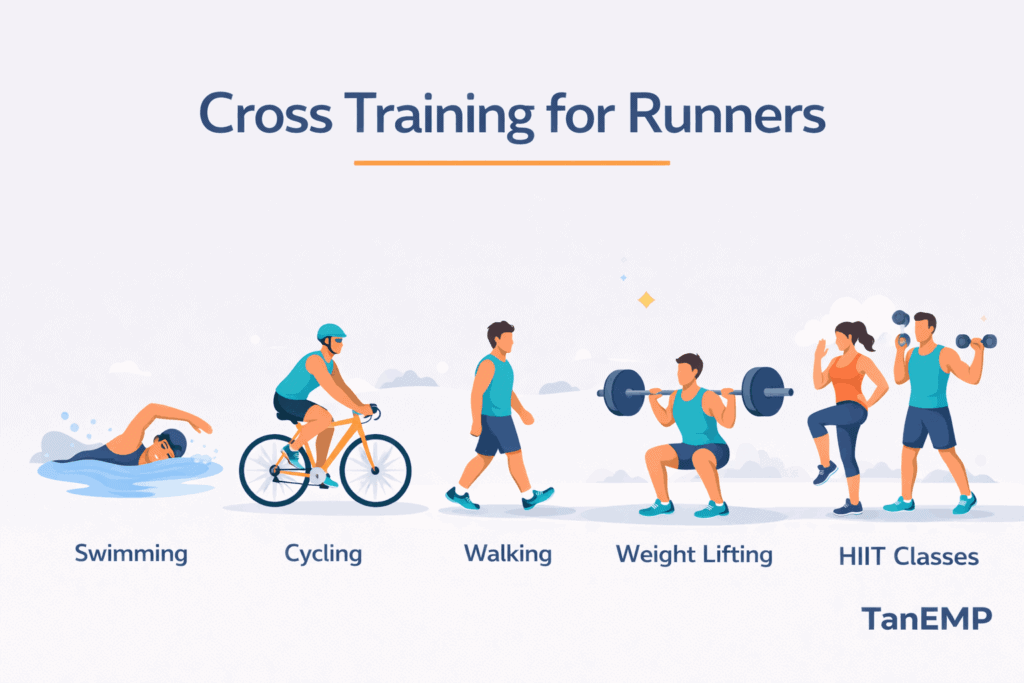
🚴♂️ 2. Add Cross Training to Reduce Stress on Your Body
Running is repetitive.
Same movement, over and over.
That’s why adding cross training is one of the smartest recovery strategies you can use.
Good options:
- Cycling
- Swimming
- Elliptical
- Rowing
On your recovery days, this helps:
- Reduce stress on joints
- Improve cardiovascular health
- Keep your body moving without overload
It also helps manage overall stress, especially if your training plan is getting more intense.
For runners, cross training is a simple way to stay consistent without increasing injury risk.
🛑 3. Take a True Rest Day (Don’t Skip This)
This is the one most runners avoid.
But it’s one of the most important.
A true rest day allows your body to:
- Complete muscle repair
- Restore energy levels
- Reduce fatigue
- Support adequate recovery
Without enough rest, your body never fully catches up.
That’s when problems show up:
- Increased soreness
- Slower recovery time
- Higher injury risk
At least one full rest day per week is essential—especially as your training increases.
And here’s something most people overlook:
Recovery isn’t just physical.
Your brain needs a break too.
🧘 4. Do Dynamic Stretches Before and After Running
Jumping straight into a run without warming up is one of the fastest ways to feel stiff and tight.
👉 That’s where dynamic stretches come in.
These are controlled, moving stretches that prep your body for movement.
Good options:
- Leg swings
- Walking lunges
- High knees
- Hip circles
Dynamic stretching helps:
- Increase blood flow
- Improve mobility
- Help you stay loose during your run
It also improves your body’s ability to handle training stress, especially as mileage builds.
Even 3–5 minutes before your run can make a big difference in how your body feels.
🧘♂️ 5. Add Static Stretching After Your Run
After your run is when you want to slow things down.
👉 This is where static stretching fits in.
Hold each stretch for 20–30 seconds and focus on:
- Hamstrings
- Calves
- Hip flexors
- Glutes
This helps:
- Reduce muscle soreness
- Improve flexibility
- Support your overall recovery
Think of this as part of your post run routine—not optional.
It doesn’t need to be long. Just a few minutes consistently can help your muscles recover better over time.
🌀 6. Use Foam Rolling for Self Myofascial Release
If your legs feel tight or heavy, foam rolling is one of the simplest recovery tools you can use.
It works through self myofascial release, helping reduce tension in your muscles.
Focus on:
- Quads
- Hamstrings
- Calves
- Glutes
Foam rolling helps:
- Promote circulation
- Reduce stiffness
- Support muscle repair
- Help reduce inflammation
Just a few minutes per area is enough.
This is especially helpful during higher training weeks when your muscles are under more stress.
❄️ 7. Try an Ice Bath for Faster Recovery
After a hard workout, long run, or race, your muscles can feel beat up.
👉 An ice bath can help.
It may:
- Reduce inflammation
- Decrease muscle soreness
- Improve recovery time
A simple setup:
- 10–15 minutes
- Cold but tolerable water
This isn’t something you need every day.
But after a tough training week, race, or big effort, it can be a useful recovery tool—especially for marathon runners or those building toward a half marathon.
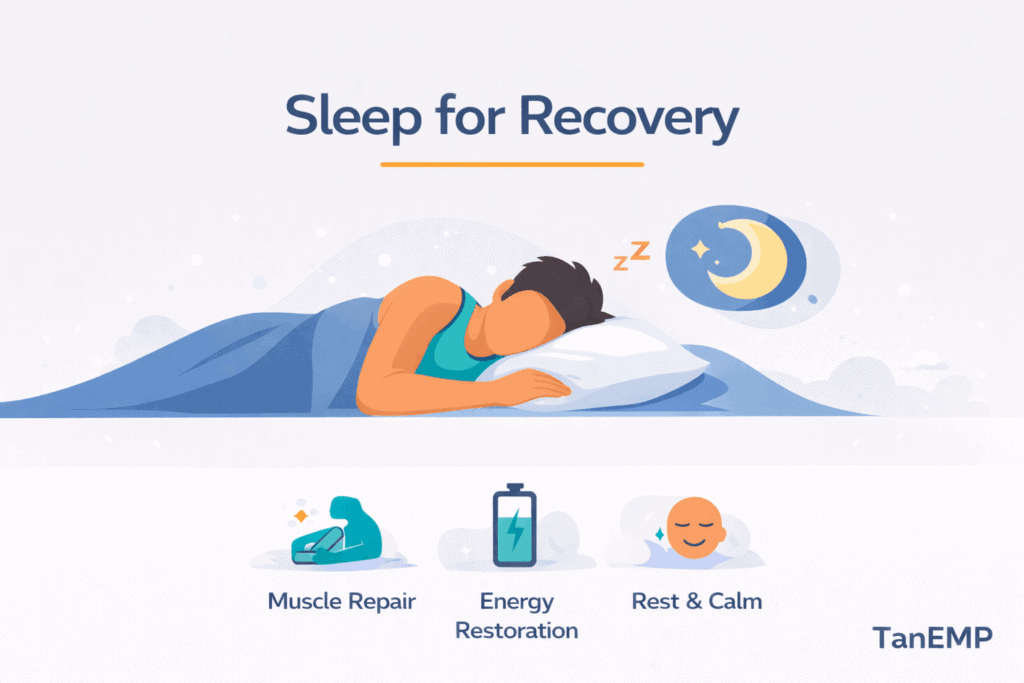
🛌 8. Prioritize Quality Sleep Every Night
If you want better recovery, start here.
👉 Sleep is where real recovery happens.
During sleep, your body:
- Supports muscle repair
- Regulates hormones
- Lowers cortisol levels
- Helps your muscles recover
Consistent quality sleep leads to:
- Better energy
- Less soreness
- Improved running performance
This is one of the most overlooked—but most powerful—recovery strategies.
🌙 9. Aim for Seven to Nine Hours of Sleep
Most runners don’t get enough sleep.
But your body needs it—especially when training increases.
👉 Aim for seven to nine hours per night.
This helps:
- Improve recovery
- Support overall health
- Keep your body functioning properly
If your sleep is off, your recovery will be too.
Simple as that.
😌 10. Reduce Stress to Improve Recovery
Recovery isn’t just physical—it’s mental too.
High stress levels can slow down the recovery process by increasing cortisol levels.
That affects:
- Sleep
- Energy
- Muscle recovery
Your personal life, work, and daily routine all play a role.
Simple ways to reduce stress:
- Walk outside
- Light mobility work
- Breathing exercises
- Taking a break from intense training
Lower stress = better recovery.
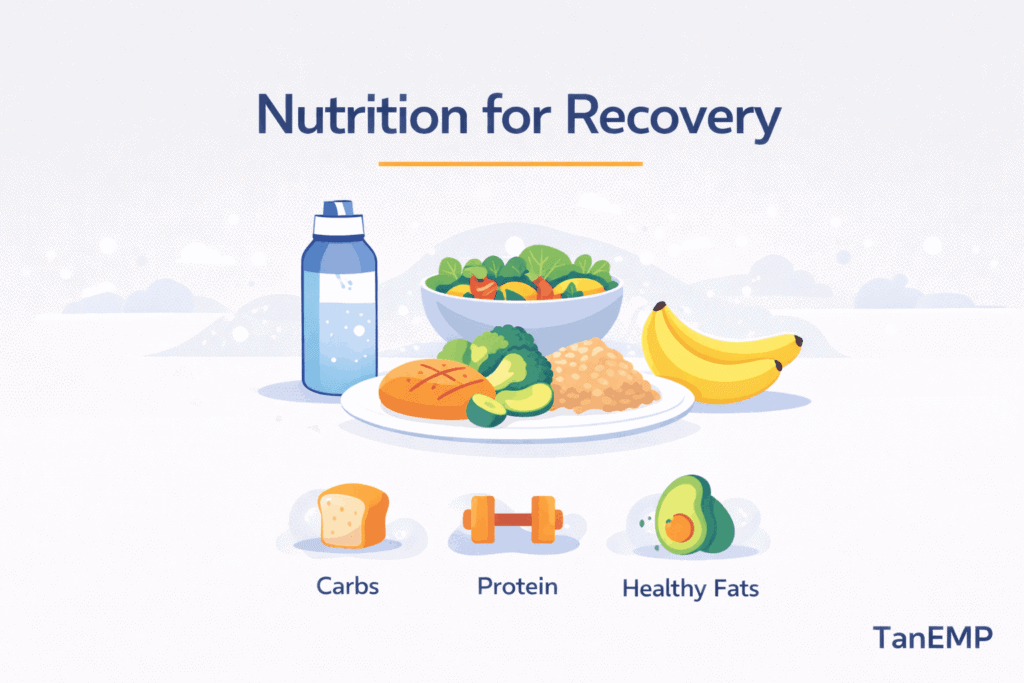
🥗 11. Refuel Properly After Every Run
What you do after your run matters.
👉 Refueling helps your body replenish glycogen stores and start recovery right away.
After a run:
- Carbs restore energy (glycogen stores)
- Protein supports muscle repair
A simple approach:
- Snack or meal within 1–2 hours
- Balanced carbs + protein
This is especially important after a long run or harder workout.
💪 12. Eat Enough Protein for Muscle Repair
Protein is essential for recovery.
It helps rebuild and repair muscles after training.
Good options:
- Eggs
- Chicken
- Greek yogurt
- Protein shakes (protein powder)
Aim to include protein regularly throughout the day—not just after workouts.
This supports:
- Muscle repair
- Recovery
- Performance
💧 13. Stay Hydrated Throughout the Day
Hydration plays a huge role in recovery.
👉 Your body needs fluids to function properly.
Focus on:
- Drinking water consistently
- Replacing electrolytes when needed
- Using options like coconut water after harder runs
Proper hydration helps:
- Reduce fatigue
- Support muscle function
- Improve recovery
🥑 14. Add Healthy Fats to Reduce Inflammation
Not all fats are bad—some actually help recovery.
👉 Healthy fats can help reduce inflammation and support overall health.
Examples:
- Avocados
- Nuts
- Olive oil
This helps:
- Support recovery
- Reduce inflammation
- Keep your body functioning well
🍠 15. Use Simple Recovery Foods (Like Sweet Potatoes)
Recovery doesn’t need to be complicated.
Simple foods work great.
👉 Example: sweet potatoes
They provide:
- Carbohydrates for energy
- Nutrients to support recovery
- Long-lasting fuel
Keep it simple and consistent.
💪 16. Manage Your Training Load (Follow the 10% Rule)
If you want to avoid injury, this is one of the biggest key things to understand.
👉 Don’t increase your training load too fast.
A simple guideline:
- Increase mileage or intensity by no more than 10% per week
This helps your body adapt without overload.
When training ramps up too quickly:
- Muscles don’t fully recover
- Stress builds up
- Injury risk increases
A smart training plan balances effort with recovery.
This is especially important for:
- Beginner runners
- Those preparing for a race
- Anyone increasing mileage
Slow progress = consistent progress.
⚠️ 17. Listen to Your Body (Avoid Overuse Injuries)
Your body gives you signals—most runners just ignore them.
If something feels off, don’t push through it.
Warning signs:
- Persistent soreness
- Sharp pain
- Fatigue that doesn’t go away
Ignoring these can lead to overuse injuries that take weeks (or longer) to recover from.
Listening to your body helps:
- Prevent injury
- Improve recovery
- Keep training consistent
Sometimes the best move is taking a step back.
🏁 18. Adjust Recovery Around Races and Long Runs
Recovery becomes even more important around a race or big effort.
After a:
- Long run
- Race day
- Hard training session
Your body needs more time to recover.
Focus on:
- Rest
- Light movement
- Refueling
- Sleep
This applies whether you’re training for:
- A 5K
- A half marathon
- Or full marathon runners prepping for race day
The goal isn’t to jump right back into training—it’s to let your body fully recover so you can come back stronger.
📅 19. Plan Recovery Weeks Into Your Training
Recovery shouldn’t be random.
👉 It should be built into your training plan.
Every few weeks, include a lighter week:
- Reduce mileage
- Lower intensity
- Add more rest
This gives your body time to reset.
These planned recovery periods help:
- Prevent burnout
- Improve performance
- Reduce injury risk
Think of it as a strategic break, not lost progress.
🧠 Bonus: Recovery Tips for Long Distance Runners and Race Prep
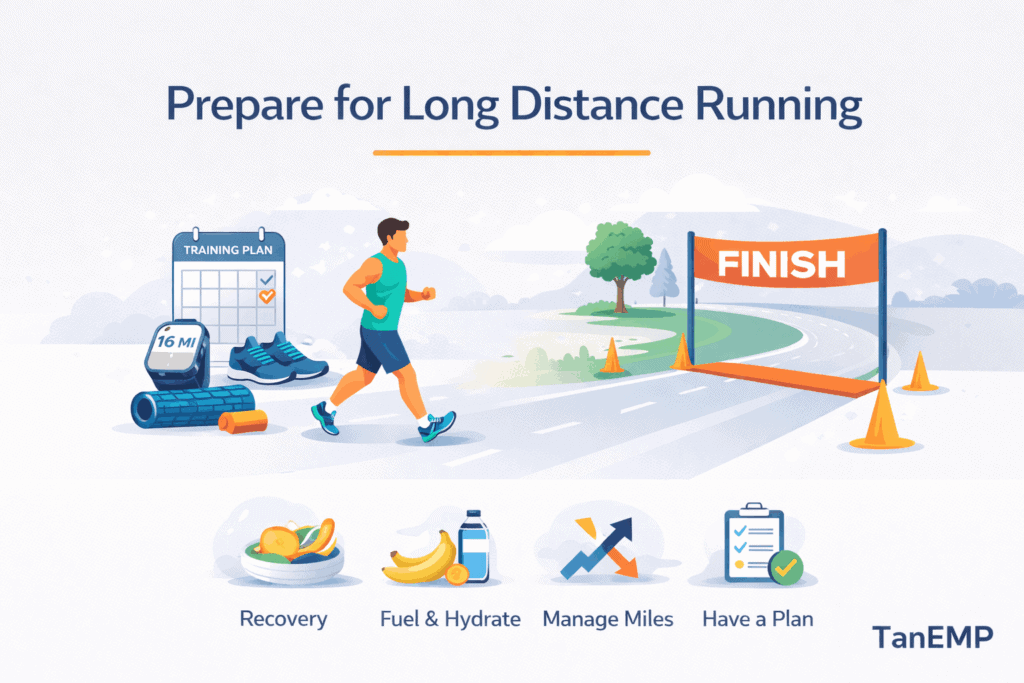
If you’re training for longer distances or a running event, recovery becomes even more important.
For long distance runners, the goal isn’t just finishing—it’s reaching the finish line feeling strong.
That means:
- Prioritizing recovery days
- Managing training stress
- Supporting your body consistently
Even elite athletes focus heavily on recovery because it directly impacts performance.
Whether it’s your first race or another running event, recovery is what helps you stay consistent from start to finish.
✅ Conclusion
Recovery isn’t optional—it’s part of the process for every runner.
Whether you’re a beginner or training for a race, your body needs time to recover. The harder you train, the more it matters.
A common mistake? Ignoring early signs.
That tight calf or slight knee discomfort often feels better after warming up—so it gets brushed off.
Until it comes back worse after a long run or the next day.
That’s how small issues turn into injuries.
I’ve seen runners miss races or stop mid-training not because of effort—but because recovery was overlooked.
Keep it simple:
- Prioritize sleep
- Take rest days seriously
- Stay consistent with small habits
And if you want extra support, the right tools can help.
👉 Check out running gear for beginners
Stay consistent with recovery—and you won’t just run better. You’ll last longer.
FAQs: Recovery Tips for Runners
1. How long does it take for muscles to recover after running?
Most muscles recover within 24–72 hours, depending on your training intensity and experience level.
Longer runs, races, or higher training load may require more recovery time.
2. Is it okay to run every day?
It depends on your experience and recovery.
Most runners benefit from at least one rest day per week to allow proper recovery and reduce injury risk.
3. What is the best recovery method after a run?
he best approach combines:
Active recovery
Proper nutrition
Hydration
Quality sleep
There’s no single fix—consistent habits work best.
4. Should I stretch before or after running?
Use dynamic stretches before your run to warm up.
Save static stretching for after your run to improve flexibility and reduce muscle tightness.
5. What should I eat after a run?
Focus on:
Carbohydrates to replenish glycogen stores
Protein to support muscle repair
Simple options like a balanced meal or snack within 1–2 hours work well.