How to Run Faster and Longer (for Beginners) 2025

Ready to Level Up?
Here’s How to Run Faster and Longer — Without Burning Out
If you’ve been running for a little while now and you’re wondering, “How do I pick up the pace — and still keep going?” you’re in the right spot.
Getting past the beginner hump is huge. Maybe you’ve already built a bit of endurance, but now you want to improve your running performance, boost your pace, and push your entire distance just a little farther without crashing halfway through.
This guide breaks down 11 practical, beginner-friendly strategies to help you run faster and longer, without overtraining or hitting a wall. These aren’t elite-only tricks — they’re smart, realistic habits any everyday runner can apply, whether you’re training for a 5K or just trying to outpace your past self.
Let’s get into it.
🏁 TL;DR: How to Run Faster and Longer (for Beginners)
Ready to level up your pace and endurance? Here’s a quick look at the 11 key habits that work:
✅ Warm Up Right – A quick 5-minute warm-up boosts performance and prevents injury
✅ Refine Your Form – Efficient form = less energy wasted, more speed
✅ Add Interval Training – Mix short sprints with recovery to build endurance and speed
✅ Boost Cadence – A Small increase in step rate improves efficiency and reduces impact
✅ Strength Train Weekly – Strong legs and core support longer, faster runs
✅ Recover Like You Mean It – Sleep, stretch, and foam roll to bounce back stronger
✅ Use Static Stretching Post-Run – Improve flexibility and avoid tight, sore muscles
✅ Cross-Train Smarter – Add cycling, swimming, or mobility work to stay balanced
✅ Train Your Mind – Mental grit gets you through tough runs and race day nerves
✅ Breathe with Purpose – Deep belly breathing = more energy and endurance
✅ Gear Up Wisely – Shoes, GPS watch, resistance bands, and vests all support your performance goals
Want to improve your running performance in 2025? Stick to these habits — and show up consistently.
How to Run Faster and Longer For New Runners
To improve your long-distance running, it’s all about learning to maintain speed while tapping into maximum power. With smart habits, you’ll build the strength and stamina needed to run farther and faster, without burning out.
Ready to level up and run faster and longer? Let’s break it down step by step.
1. Prime Your Body with a Proper Warm-Up
If you’re working on running faster and longer, warming up isn’t something to skip — even a quick one helps more than you think.
Just 5 minutes of dynamic stretching before your run can improve running efficiency, boost overall running performance, and help you avoid injuries.
One of my patients started running without warming up. After three weeks, her knees started hurting, and she had to stop running completely. A short warm-up could’ve made a big difference.
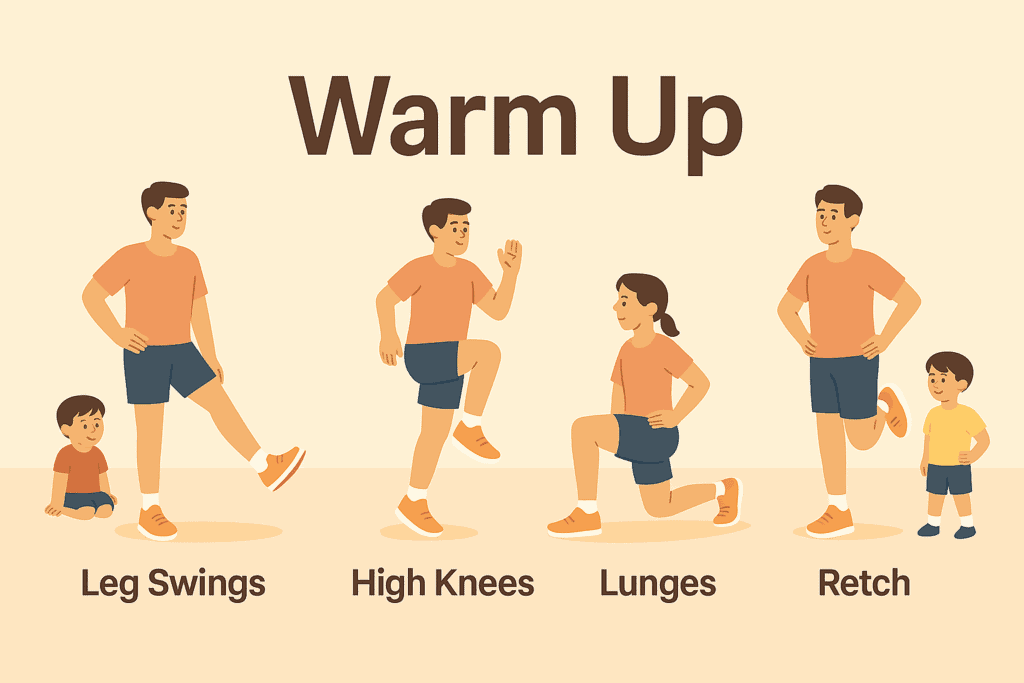
Here’s a quick routine to try before your next run:
- Leg swings (front-to-back and side-to-side)
- Butt kicks
- High knees
- Arm swings or arm circles
- Walking lunges
These simple moves wake up your muscles and get your blood flowing so your body’s ready to move at a faster pace.
👉 Try this 5-minute running warm-up if you want something quick and effective.
Warming up is one of the easiest ways to improve performance and stay injury-free as you build distance and speed.
2. Refine Your Form to Run More Efficiently
If you want to maintain speed and cover more ground, your running mechanics matter more than you think.
Good running form helps you move with less effort, which means you can run faster and longer without burning out early.
Focus on the basics:
- Keep your posture tall but relaxed
- Engage your core
- Drive your arms straight forward and back, not across your body
- Land with a light foot strike under your center of gravity
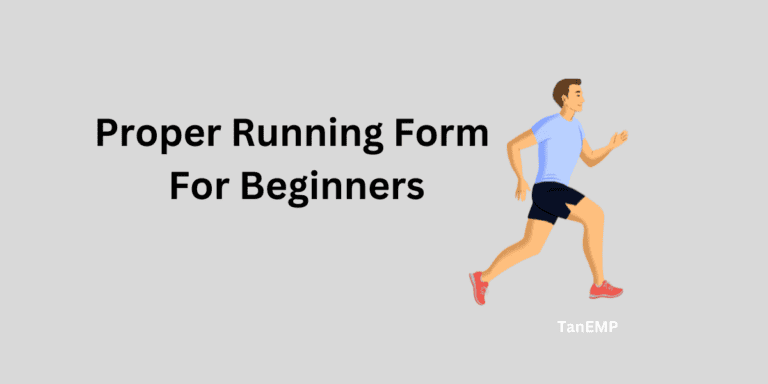
Even small tweaks can help you run smoother and avoid wasted energy. Want a deeper breakdown? Check out this guide to proper running form for beginners.
Dialing in your form sets the foundation to improve speed, endurance, and stay injury-free.
3. Build Speed with Interval Training
Interval training is one of the simplest ways to boost your running performance. It helps you build speed and endurance by mixing short bursts of effort with recovery jogs or walks.
A beginner-friendly example: run fast for 30 seconds (think 7–8 out of 10 effort), then jog or walk for 1–2 minutes. Repeat this 4–6 times.
These speed workouts teach your body to handle high-intensity training without burning out. Over time, you’ll be able to run faster and hold that pace longer.
Want an easy place to start? Try this HIIT treadmill workout that’s perfect for building confidence and conditioning indoors.
4. Use Cadence to Boost Speed and Efficiency
Dialing in your running cadence is one of the easiest ways to improve your running efficiency and pick up the pace, without feeling like you’re sprinting the whole time.
Cadence refers to how many steps you take per minute (SPM). Most beginner runners fall somewhere between 150–165 SPM. Increasing your cadence slightly can reduce the impact on your joints and help you run faster with less effort. A small increase in cadence (about 5–10%) has been shown to reduce loading forces on the knees and hips, improve stride mechanics, and boost overall efficiency [PMC Study].
Here’s a quick breakdown of how cadence affects your speed:
- 150 SPM – common for new runners; may feel bouncy or heavy over long distances
- 160 SPM – more rhythm and control; decent for steady long runs
- 170 SPM – often the sweet spot for smoother strides and efficient pacing
- 180+ SPM – typically used during speed workouts or by experienced runners for racing
🟢 Start small: Add 5 steps per minute using a metronome or cadence-focused playlist. Quick, light steps beat long, heavy strides when you’re trying to run faster and longer.
👉 Want drills and tips? Check out Running Cadence for Beginners to get started.
5. Strength Train Regularly
Ever seen behind the scenes of Olympic runners? Whether they’re sprinting or going long distance, one thing’s the same — they don’t just run. They strength train.
Strong glutes, hamstrings, and core muscles are what keep their stride efficient and explosive. The same goes for you. Weak or overused muscles lead to compensation, poor running form, and eventually, injury. If you’re skipping strength, you’re skipping the foundation.
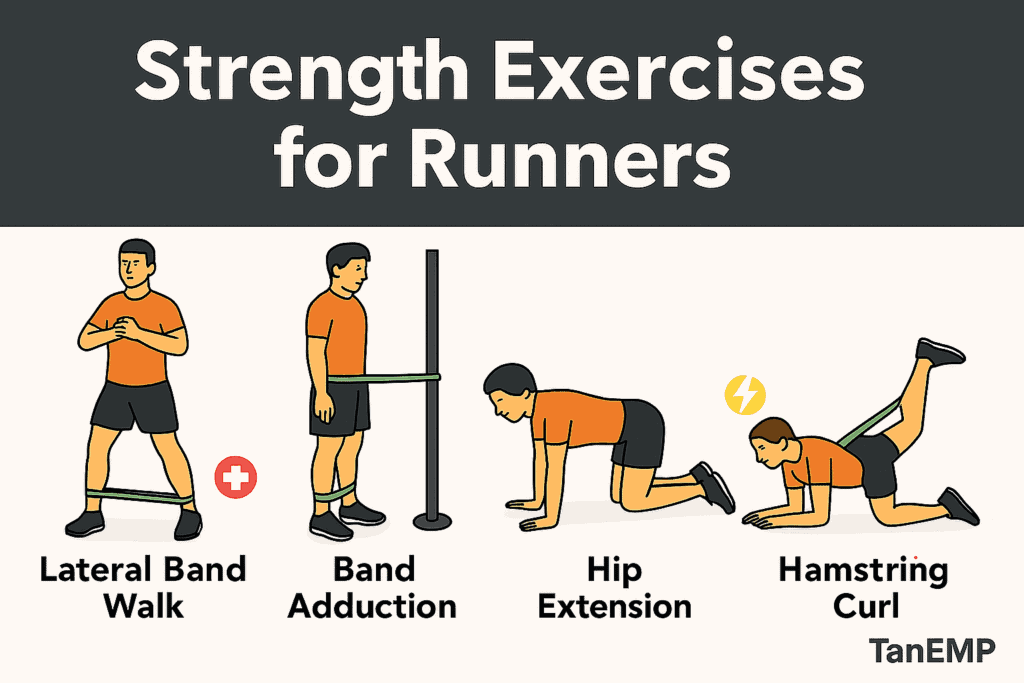
You don’t need fancy equipment to see a difference. A few resistance band workouts a week — think squats, lunges, bridges, planks — can improve your endurance, posture, and balance. The exercises below are beginner-friendly and target the muscles that most runners tend to neglect.
Exercise | Muscle Group | Instructions |
|---|---|---|
Lateral Band Walks | Glutes / Abductors | Band above knees, feet 8–12 inches apart. Step sideways 10–15 steps, then return. |
Banded Hip Adduction | Inner Thigh / Core | Tie the band to a fixed object, loop around the ankle/knee. Pull the leg toward the center. |
Banded Hamstring Curl | Hamstrings | Lie face down, band on ankle + secure object. Pull the heel toward the glute slowly. |
Banded Glute Bridge | Glutes / Core | Band above knees, lie on back, feet flat. Press hips up, hold, return slowly. |
Building power off the track helps you maintain speed, avoid breakdowns, and run stronger for longer. Strength training isn’t extra — it’s essential.
6. Recover Like It’s Part of the Plan
If you’re serious about running longer and faster, you need to treat recovery like part of your training, not just an afterthought.
When you push harder, your muscles break down more, and how well you recover determines how strong you come back. Skipping rest days, foam rolling, or sleep might seem like a hustle… but it’s a fast track to burnout and injury.
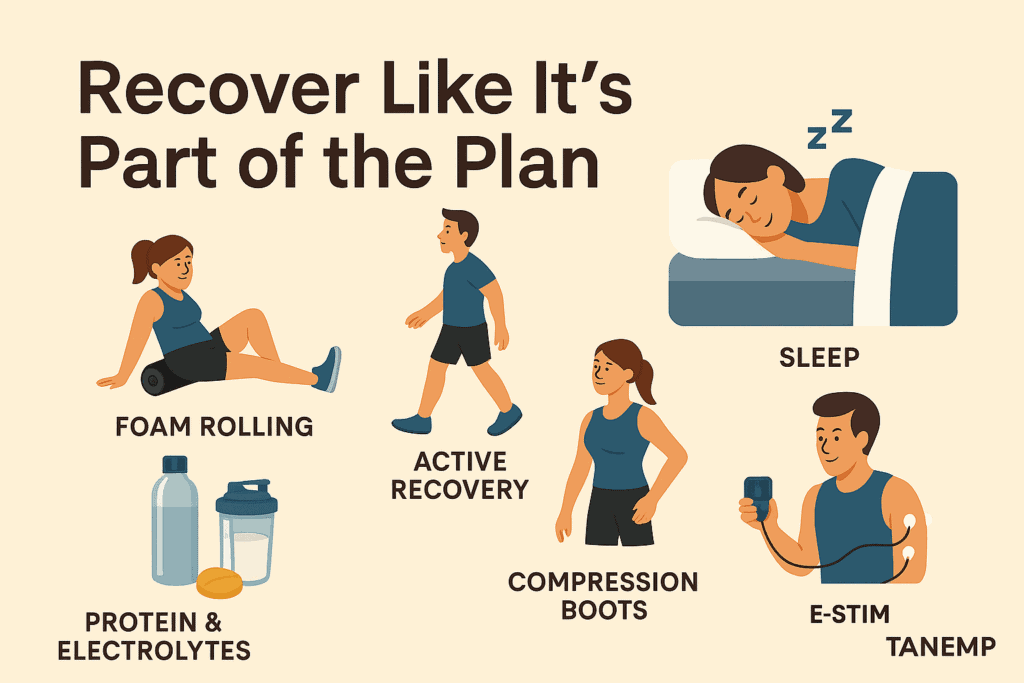
Here’s what smart recovery looks like:
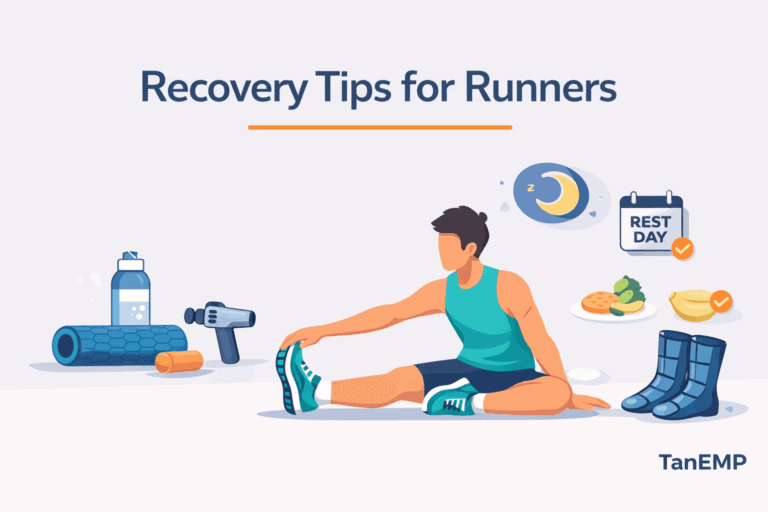
- Foam rolling or using a massage gun to improve circulation
- Active recovery (light walks or yoga) between harder sessions
- Sleep — at least 7–9 hours, especially after speed work
- Refueling with protein and electrolytes (try clear whey isolate)
- Compression boots or E-stim if you’re training consistently
For more recovery tips and tools, check out these muscle recovery strategies.
Rest isn’t weakness — it’s where the gains happen.
7. Use Static Stretching to Stay Mobile and Injury-Free
Running fast is great — but not if you’re stiff and sore after every session.
That soreness and stiffness? It means your muscles are tight, and when that happens, your body has to work harder just to move the way it should. Over time, tight muscles throw off your form, increase fatigue, and raise your injury risk.
Static stretching after running helps your muscles relax, improves flexibility, and supports better recovery routines. It’s especially helpful after speed sessions or longer runs where you’ve pushed your limit.
Here are a few key static stretches to aid recovery and keep your stride smooth:

- Standing Hamstring Stretch – loosens up after longer strides
- Calf Wall Stretch – targets tight lower legs
- Seated Glute Stretch (Pigeon Pose) – opens up your hips
- Hip Flexor Lunge Stretch – great if you sit a lot
- IT Band Side Lean – helps reduce outer knee tension
- Cat & Cow – gentle on your spine and lower back
Make this a quick 5-minute habit after your runs — your future legs will thank you.
👉 Not sure how static stretching differs from dynamic? Here’s a simple breakdown.
8. Cross-Train for Balance and Power

If you want to run stronger and farther, you can’t just run.
Cross-training helps you build leg strength, improve running power, and stay injury-free, especially as you start adding more long-distance runs.
It’s all about mixing in other workouts that support your running without wearing you out.
Try these on your non-running days:
- Cycling builds strong quads and glutes
- Swimming – great for cardio without the joint stress
- Resistance band work – strengthens small muscles that support good form
- Yoga or mobility drills – improve balance and flexibility
A little cross-training each week keeps your body balanced, your mind fresh, and your runs feeling better than ever.
9. Train Your Mind for Consistency and Focus
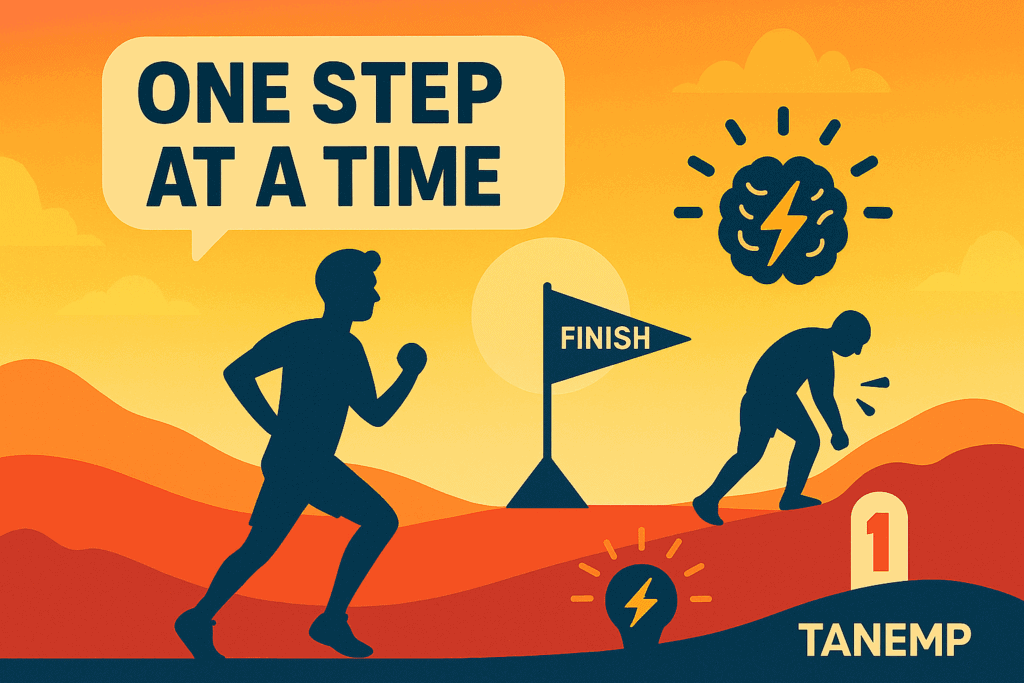
Running isn’t just physical — it’s a mental game too.
When you’re pushing to run faster and longer, your brain will hit mental barriers before your legs do. That’s why building mental stamina is just as important as building leg strength.
Here’s what helps:
- Break it up: Think one mile, one song, or one stretch of road at a time
- Positive self-talk: Simple mantras like “strong and steady” or “one more step” can carry you through
- Visualize success: Picture yourself finishing strong or powering up the final hill
- Tough runs build grit: Not every run will feel good, and that’s okay
- Celebrate small wins: 30 seconds longer or one extra mile? That’s real progress
Mental training supports your overall mental health and gives you the explosive power to keep going when it counts most.
10. Breathe Better to Boost Endurance and Stability
At this point, we’ve covered form, strength, tempo runs, and recovery. So what else can give you that extra edge in both speed and distance?
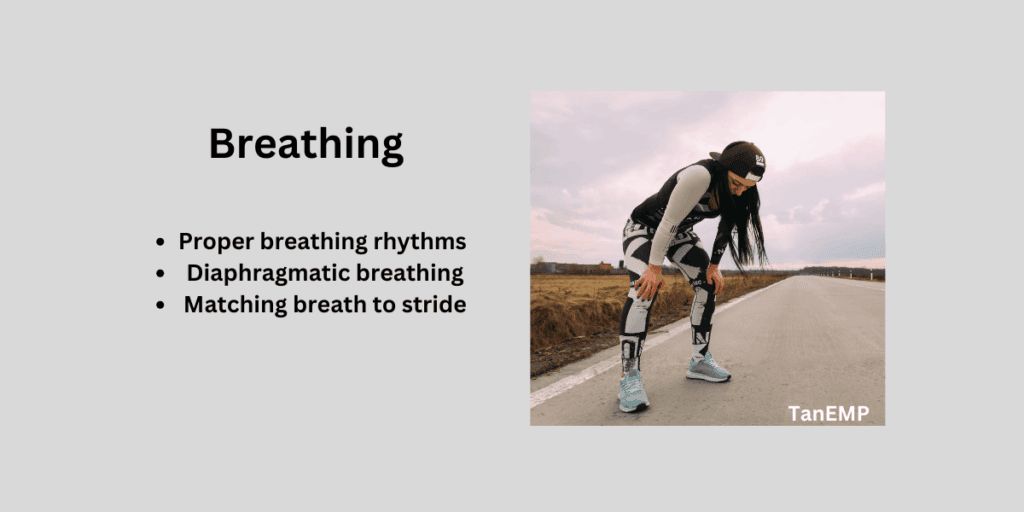
Breathing. And not just any breathing — abdominal breathing.
Many runners overlook it, but seasoned athletes don’t. Learning how to breathe deeply through your belly can improve oxygen intake and give you more energy during long runs. It also builds core stability, which supports proper form and helps you stay steady even when you’re tired.
Shallow chest breathing limits your aerobic endurance. But with belly breathing, you’re training your body to handle longer efforts with less fatigue.
It may feel awkward at first, but practice it during your warm-ups and easy runs — it’ll pay off on race day.
11. Choose the Right Gear to Support Your Goals
Keywords: running shoes, efficient stride, both speed
The right gear won’t just keep you comfortable — it can actually help you train smarter and improve your performance.
To run faster and longer, you need more than just decent shoes. You need tools that support your stride efficiency, tracking, and recovery.
Start with well-cushioned running shoes that match your gait and help you maintain an efficient stride — that’s foundational. Then layer in smart gear that supports your pace, monitors progress, and helps you train with intention.
Gear That Supports Speed and Endurance
Gear | What It Helps With |
|---|---|
✅ Performance running shoes | Cushion and support for better stride and speed |
✅ Lightweight GPS watch | Tracks pace, cadence, and distance in real time |
✅ Interval timer app / wearable | Helps structure speed sessions and manage intensity |
✅ Weighted vest (5–10 lbs max) | Builds endurance and strength when used carefully |
✅ Resistance bands | Great for strength training to support running mechanics |
✅ Foam roller/massage tools | Speeds up recovery and reduces soreness between sessions |
✅ Hydration vest or running belt | Keeps you fueled and hydrated during long-distance efforts |
✅ Moisture-wicking gear/socks | Regulates temperature and supports recovery through compression |
Wrap Up
You don’t need elite genetics or fancy training to get faster and go farther. Just build a solid routine around warm-ups, proper form, interval training, strength work, and smart recovery.
Add in the right mindset, supportive gear, and breathing control, and you’ll be on your way to running stronger, longer, and with more confidence each week.
Now you’ve got the tools. All that’s left is to show up — and start running.
Disclaimer: This article is based on my experience as a licensed chiropractor and recreational runner. The information provided is for educational and informational purposes only and is not intended to replace medical advice, diagnosis, or treatment. Always consult with your healthcare provider before beginning a new exercise program, especially if you have pain, injuries, or medical concerns.
FAQ for How to run faster and longer
1. What’s the best training plan to run faster and longer?
A solid training plan should balance speed training, endurance training, and rest days. Incorporate interval workouts, long runs, and cross-training throughout the week. These elements together help build strength, improve running economy, and prevent overtraining. Start with 3–4 runs per week and gradually increase your mileage to avoid injury.
2. How do I improve my running pace without burning out?
Focus on small, consistent progress. Use speed workouts like short intervals or hill sprints to improve your running speed. But be sure to follow high-effort sessions with easy runs or recovery days. Listening to your body is key to building both speed and mental stamina without overdoing it.
3. Should I train my upper body too, or just my legs?
Yes, your upper body plays a bigger role in running than most beginners realize. Strong arms and core muscles help maintain posture and reduce energy waste. Include strength training moves like planks, rows, and pushups to support your overall running performance.
4. How fast should I increase my running distance or speed?
Stick to the 10% rule — increase your running distance or training intensity by no more than 10% each week. This approach helps reduce the risk of injury and gives your body time to adapt. It’s better to gradually increase your effort than push too fast and miss training time.
5. What’s the ideal running pace for beginners trying to run faster and longer?
It depends on your current fitness level. Start at a challenging but sustainable pace — one where you can speak in short sentences but still feel like you’re working. Over time, your pace will naturally improve as your endurance and explosive power build with regular training.