Post Run Recovery Routine for Beginners (Recover Faster & Stay Consistent)

Ever finish a run feeling fine… then a day or two later, your legs feel tight, sore, or just off?
A lot of beginner runners think recovery only matters after something starts to hurt. Like when soreness kicks in, or when pain shows up after a few weeks of running. But by that point, your body has already been sending signals — they just got ignored.
From working with runners, this is one of the most common patterns. Recovery doesn’t start when you feel pain. It starts right after your run.
If you wait until something feels wrong, you’re no longer in recovery mode — you’re trying to fix a problem. And sometimes that means taking extra time off or dealing with something that could’ve been avoided.
The good news is, recovery doesn’t have to be complicated. A simple post run recovery routine can help reduce muscle soreness, improve performance, and keep you running consistently without setbacks.
If you’re just getting started, building a strong foundation with simple habits—like those covered in to tips for beginner runners—will make everything feel easier, including your recovery.
And as your training builds, having the right setup—like what’s outlined in running gear for beginners—can also make a difference in how your body handles each run.
Let’s walk through exactly what to do after every run.
TL;DR – Simple Post Run Recovery Routine
- Walk for 5–10 minutes after your run
- Keep light movement going (active recovery)
- Do simple stretching
- Refuel with a post run meal + hydration
- Add foam rolling later in the day
- Prioritize quality sleep
- Plan rest days and recovery days
Why a Routine Matters More Than Random Recovery Tips
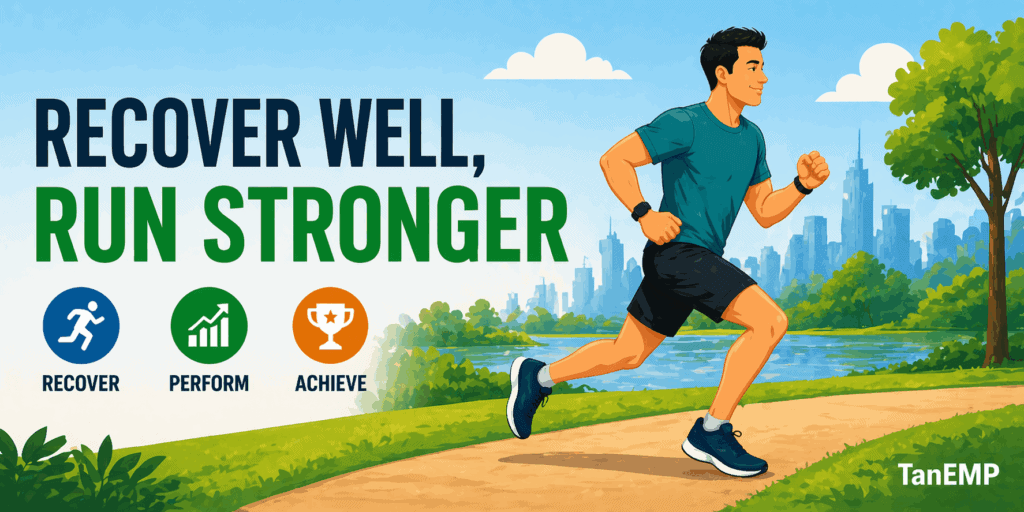
A lot of runners know recovery is important. But without a clear system, it turns into random habits that are easy to skip.
The body responds better to consistency. A structured recovery process helps support muscle repair, improve blood flow, and reduce overall physical stress from training.
Instead of guessing what to do, having a simple routine makes proper recovery automatic—and that’s what leads to long-term progress.
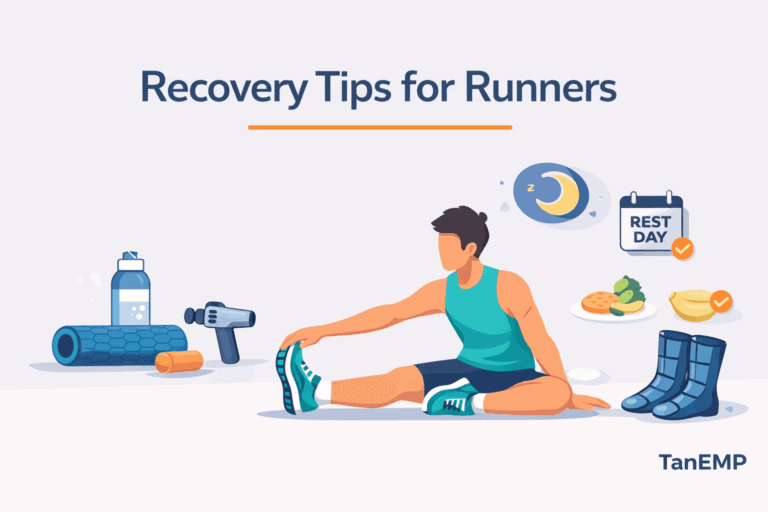
If you want a broader breakdown of recovery strategies, you can check out recovery tips for runners, but here we’re focusing on what to do step-by-step after every run.
Proper Post Run Recovery (Step-by-Step)
Phase 1: Right After Your Run (0–10 Minutes)
Right after you stop running, don’t just sit down or jump into your car.
Walk for 5–10 minutes instead.
This helps:
- Gradually lower your heart rate
- Promote circulation
- Keep blood flow moving through your muscles
It might feel small, but this transition phase plays a big role in reducing stiffness later on.
Phase 2: Keep Your Body Moving (10–20 Minutes)
After your cooldown walk, keep things light.
This is where active recovery comes in.
Simple low impact exercise like:
- Walking
- Easy cycling
Helps maintain blood flow and prevents your muscles from tightening up too quickly.
A lot of runners skip this step and go straight to sitting—which is usually when stiffness starts to kick in.
Phase 3: Stretch and Reset Your Muscles
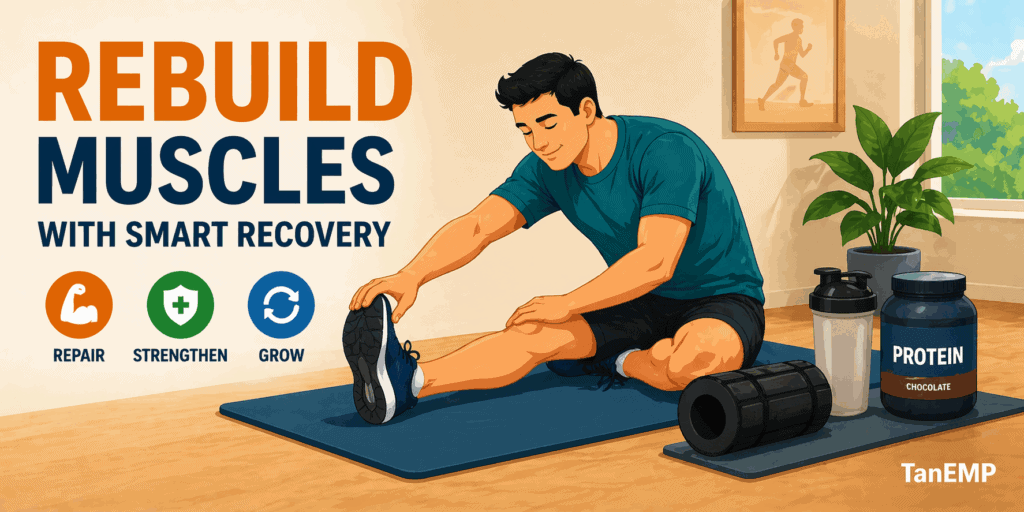
Once your body settles a bit, add some simple stretching.
Focus on the main muscle groups used in running:
- Hamstrings
- Quads
- Calves
- Hips
Keep it basic. You don’t need a long routine.
If you’re unsure where to start, using something like a quick 5-minute running warm-up (in reverse as a cooldown) can help keep things consistent.
Phase 4: Refuel and Rehydrate (Within 60 Minutes)
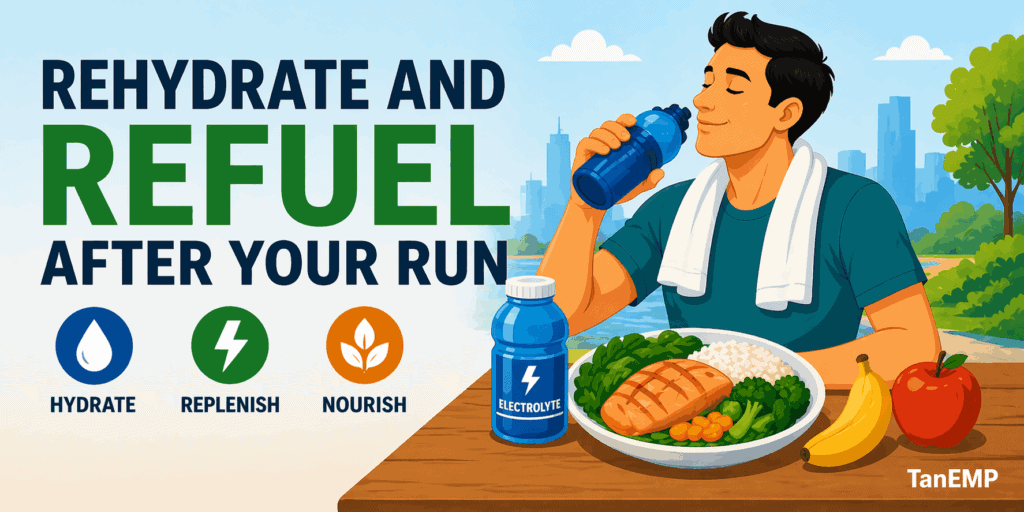
What you do after your run matters just as much as the run itself.
Start with proper hydration:
- Drinking water
- Replacing lost electrolytes (coconut water is a simple option)
Then focus on your post run meal:
- Protein → supports muscle repair
- Complex carbs → restore energy (sweet potatoes, rice, etc.)
You don’t need anything fancy. Just something balanced.
This step plays a big role in reducing muscle soreness and helping your body recover faster for your next workout.
Phase 5: Later in the Day (Recovery Boost)
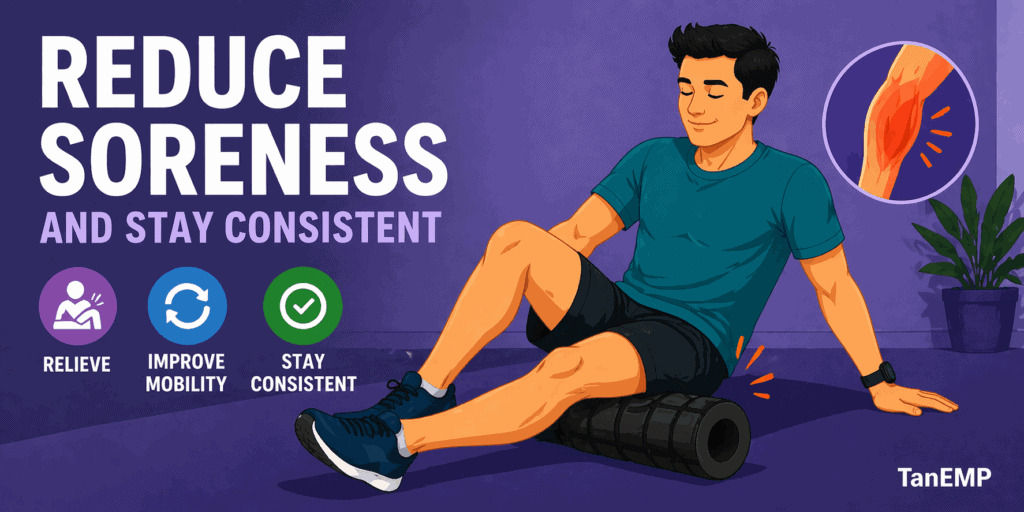
Later in the day, you can add another layer of recovery.
This is where foam rolling comes in.
Using a foam roller helps:
- Break up muscle adhesions
- Promote blood flow
- Reduce sore muscles
If you’re new to it, a simple guide on foam rolling for runners can help you get started without overdoing it.
You can also use tools like massage guns, but they’re optional. The basics work just fine.
Phase 6: Night Recovery (Where the Real Recovery Happens)
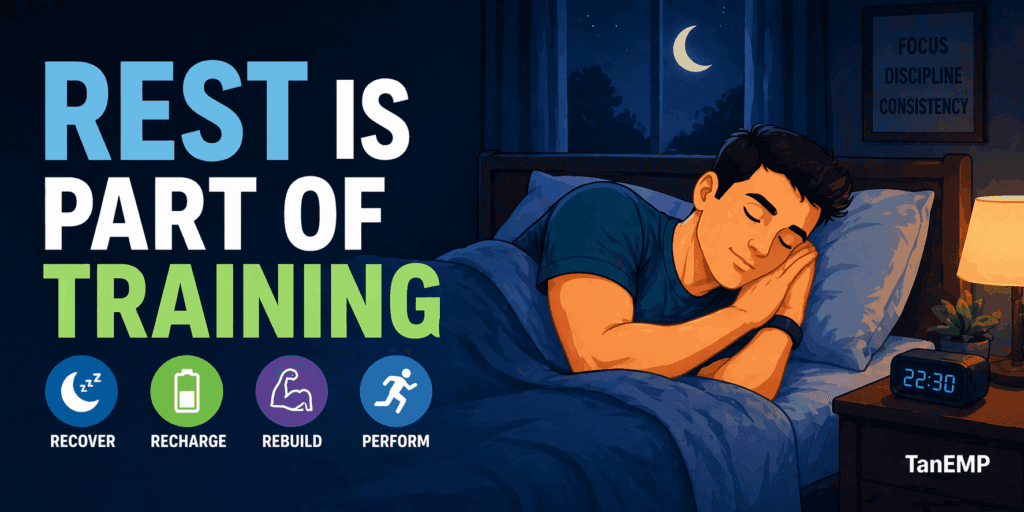
This is the most overlooked part of running recovery.
Sleep.
Aim for seven to nine hours of quality sleep.
This is when your body:
- Repairs muscle tissue
- Reduces inflammation
- Rebalances after physical stress
If your sleep is off, your recovery will be too—no matter how good your routine is during the day.
A simple habit like reducing screen time before bed can make a big difference.
Phase 7: The Next Day (Underrated Step)
Recovery doesn’t stop after your run—it continues into the next day.
Depending on how you feel, you can:
- Go for an easy run
- Walk
- Do light cross training
This keeps your body moving without overloading it.
If you’re building your weekly routine, understanding how often should beginners run can help you balance training and recovery days properly.
Phase 8: Use Rest Days the Right Way (Not Just Sitting Around)
A rest day doesn’t mean doing nothing.
It means giving your body a break from running while still supporting recovery.
What a Proper Rest Day Looks Like
Light movement like:
- Walking
- Mobility work
- Stretching
Helps keep blood flow going and prevents stiffness.
When You Should Take a Full Rest Day
If you’re feeling:
- Heavy muscle soreness
- Fatigue
- Tight or irritated muscles
That’s your signal to fully rest.
Ignoring this is one of the fastest ways to turn small issues into injuries.
Why Rest Days Help You Improve Faster
Rest days support:
- Muscle repair
- Reduced soreness
- Better overall recovery
More running doesn’t always mean faster progress. Better recovery does.
Simple Weekly Example
- 3–4 running days
- 1–2 active recovery days
- 1 full rest day
How Recovery Changes as You Progress (5K to Half Marathon)
As your mileage increases, recovery becomes even more important.
Training for longer distances like a half marathon puts more stress on your body, so your recovery routine needs to be more consistent.
This becomes especially important leading up to a big race or running event.
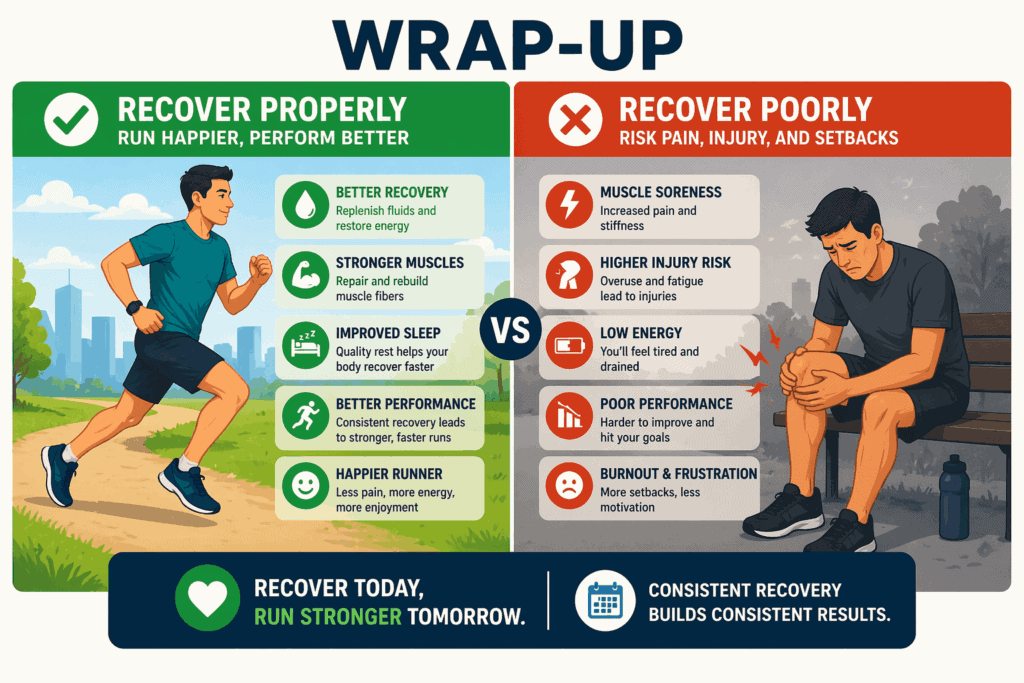
Signs Your Recovery Routine Is Working
- Less muscle soreness
- Better energy levels
- Smoother runs
- More consistent training
Signs You’re Not Recovering Properly
- Ongoing soreness
- Fatigue that doesn’t go away
- Tight muscles in multiple areas
- Drop in performance
These are early warning signs your body needs more recovery.
Common Post Run Recovery Mistakes
- Skipping cooldown
- Sitting immediately after runs
- Not eating or hydrating
- Ignoring rest days
- Doing too much too soon
Wrap-Up
Recovery doesn’t need to be complicated.
For beginner runners, it’s actually very easy to run on consecutive days because you might not feel sore right away. That’s where a lot of people get tripped up. Just because you feel okay today doesn’t always mean your body has fully recovered from yesterday’s run.
That’s how small issues start to build up over time—and eventually turn into something that forces you to take a break.
Instead of chasing more runs, focus on building a solid foundation. A simple post run recovery routine, done consistently, will help reduce soreness, support muscle recovery, and keep your training moving in the right direction.
And on your rest days, it doesn’t mean doing nothing. Adding light movement—or even simple strength work—can actually support your running and help your body handle more over time.
Take care of your body now, and your future runs will feel a lot easier.
FAQ: Post Run Recovery Routine
1. What is the best recovery method after running?
The best approach is combining hydration, nutrition, sleep, and light movement. A structured running recovery routine works better than relying on just one method.
2. How long does muscle recovery take after running?
Most recovery happens within 24–48 hours, depending on your training intensity and experience level.
3. Is foam rolling necessary for recovery?
Foam rolling isn’t required, but it helps improve blood flow, reduce muscle soreness, and support the recovery process.
4. Should I run on sore legs or take a rest day?
If soreness is mild, light activity is okay. If your legs feel heavy or painful, take a rest day to avoid injury.
5. What should I eat after a run for better recovery?
A good post run meal includes protein for muscle repair and complex carbs to restore energy. Simple meals work just fine.